
Marriner Stoddard Eccles
Let me be the first to say that I really, really wish the Federal Reserve would pull a Paul Volcker--would change its operating procedures--and announce that it will buy as many risky and long-duration assets for cash as it needs to in order to push market expectations of nominal GDP five years hence back to its pre-2008 trend level of $18 trillion/year.Evans and Rosengren can quote from the piece and wave the physical New York Times about at next week's FOMC meeting.

When you were born, you were the: 3,037,348,163rd person alive on Earth, and the 76,687,107,007th person to have lived since history began. How about looking beyond the narrow humancentric? How about apes? Mammals? Chordata? Living beings?What about pre-singularity? Or pre-grey goo. Or perhaps it's race between the two.
On February 17, 1993, in a nationally televised address to a joint session of Congress, Clinton unveiled his economic plan. The plan focused on deficit reduction rather than a middle class tax cut, which had been high on his campaign agenda.[14] (Clinton was pressured by his advisers, including Robert Rubin formerly of Goldman Sachs, to raise taxes on the theory that a smaller federal budget deficit would reduce bond interest rates
...
One of Clinton's major policy initiatives in his first term was on the American economy. Clinton's economic plan included a major expansion of the existing Earned Income Tax Credit, aimed at working class families just above the poverty line, which helped ensure that it made sense for them to work rather than seek welfare. John F Harris, argues that "this would be prove to be one of the most important and tangible progressive achievements of the Clinton years".[40]
A major problem with the economy at the time was the issue of the massive deficit and the problem of government spending. In order to address these issues, in August 1993, Clinton signed the Omnibus Budget Reconciliation Act of 1993 which passed Congress without a single Republican vote. It raised taxes on the wealthiest 1.2% of taxpayers, while cutting taxes on 15 million low-income families and making tax cuts available to 90% of small businesses.[41] Additionally, it mandated that the budget be balanced over a number of years and the deficit be reduced.[42] This was to be achieved through the implementation of spending restraints.But when the economy is in a liquidity trap and short term rates are up against the zero bound, the Fed needs to pursue unorthodox measures which may not be as effective and draw political heat. Fiscal help for the economy will help. In an emergency, the Fed becomes the lender of last resort, while the government should become the buyer of last resort, or the supplier of missing demand.
EK: One criticism you hear of the Obama administration is that there are two open seats on the Fed board. If the White House had filled those seats would things be significantly different today?
JG: Well, if they had put me and someone else on the board and we would be out there dissenting on the other side from the inflation hawks, but I’m not sure we could have swayed much policy. I don’t know that two votes is decisive. People overstate the influence of the hawks. They are a permanent minority. They’re really off on their own. There is a core of centrists that Bernanke could lead wherever he wants.
EK: On the same subject, what would their role be in the policy you lay out? The Federal Reserve can bring mortgage rates down, but that doesn’t repair the housing market on its own. It creates an opportunity for the administration to do more to repair it, right?
JG: The Fed should create an opportunity and the Obama administration should take advantage of it. The Obama administration has the power to really extend the universe of homeowners who can take advantage of lower rates. Fannie and Freddie announced programs over the last two years saying if you already have a guaranteed mortgage, even if you would not normally be able to refinance, now you could. But they put on too many conditions. They said you needed to use your normal servicer, for instance. They also made Fannie Mae and Freddie Mac raise their standards on borrowers, which is scaring the banks.
They need to break those restrictions. I agree that new borrowers should require downpayments and so forth. But if you have an existing loan, it’s a win-win for the government to help you refinance, because if you can refinance, you’re less likely to default. There is a loser here, but it’s China and rich investors who hold these loans. And why should we be protecting them?So according to Gagnon, Bernanke is really in charge and two more rational voices on the FOMC wouldn't matter that much.
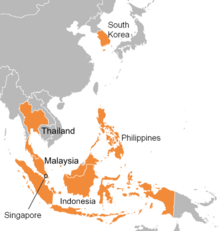
Another major factor was that these countries became excessively dependent upon exports for their economy. Indonesia, Philippines and Thailand had seen their exports to GDP ratio grow from average 35% in 1996 to over 55% in 1998. Such huge dependence upon trade made these countries susceptible to currency movements. At the time of the mid-1990s, Thailand, Indonesia and South Korea had large private current account deficits and the maintenance of fixed exchange rates encouraged external borrowing and led to excessive exposure to foreign exchange risk in both the financial and corporate sectors. In the mid-1990s, two factors began to change their economic environment. As the U.S. economy recovered from a recession in the early 1990s, the U.S. Federal Reserve Bank under Alan Greenspan began to raise U.S. interest rates to head off inflation. This made the U.S. a more attractive investment destination relative to Southeast Asia, which had been attracting hot money flows through high short-term interest rates, and raised the value of the U.S. dollar. For the Southeast Asian nations which had currencies pegged to the U.S. dollar, the higher U.S. dollar caused their own exports to become more expensive and less competitive in the global markets. At the same time, Southeast Asia's export growth slowed dramatically in the spring of 1996, deteriorating their current account position.A Note on the U.S. Comparative Advantage in the Sale of "Political Risk Insurance" by DeLong
Endnote: Others will have different ideas about the lessons learned in the past few years. I’d be interested in seeing them. But please, spare yourself the effort of posting a comment to say that Keynesian stimulus programs don’t work or that a return to the Gold Standard is our only salvation. Those are old canards, not new insights.
–In fact, 2.5% is considered the trend growth rate in the economy—about the average over a cycle. The problem is we’re coming off of such a deep recession, we need a bunch of quarters that do much better than average. In other words, we need a “V”-shaped recovery; we’re getting more of an “L.”
–real GDP is finally back to its pre-recession peak, and it’s taken us an historically very long time to get here. The figure (hat tip, BH) shows the number of quarters it has taken in the past for real GDP growth to regain its prior peak before the recession knocked it down (the top date on the x-axis is the quarter that GDP regained the peak; the bottom date is the prior peak). The average is 5.2 quarters…this go round, it took 15. That, my friends, is a long slog.

One thing that was clear during yesterday’s Iceland conference was that many people here (I’m still in Reykjavik) believe that the floating krona was responsible for the huge capital inflows that set the stage of the crisis. The story they tell is that expectations of a rising krona, combined with relatively high interest rates, drew hot money in via the carry trade. And this story is used to argue that things would have been much better if Iceland had adopted the euro.
I was kind of surprised by this, well, insularity (which I guess is more excusable if you are in fact on an island in the middle of the North Atlantic). For Iceland was by no means unique in its inflow of funds. Here’s the average current account deficit (which is equal to capital inflows) as a percentage of GDP for a bunch of European countries, over the boom years from 2000-2007:

The fact is that there was a tsunami of money flowing from the European core to peripheral economies; Iceland was just part of a broader class that included countries on fixed rates against the euro and some countries already on the euro.
There are valid arguments for euro entry (and arguments against, which I think win on balance). But this isn’t one of them.Wikipedia - Current Account:
In economics, the current account is one of the two primary components of the balance of payments, the other being the capital account. The current account is the sum of the balance of trade (exports minus imports of goods and services), net factor income (such as interest and dividends) and net transfer payments (such as foreign aid). You may refer to the list of countries by current account balance.
The current account balance is one of two major measures of the nature of a country's foreign trade (the other being the net capital outflow). A current account surplus increases a country's net foreign assets by the corresponding amount, and a current account deficit does the reverse. Both government and private payments are included in the calculation. It is called the current account because goods and services are generally consumed in the current period.[1]
The balance of trade is the difference between a nation's exports of goods and services and its imports of goods and services, if all financial transfers, investments and other components are ignored. A Nation is said to have a trade deficit if it is importing more than it exports.
Positive net sales abroad generally contributes to a current account surplus; negative net sales abroad generally contributes to a current account deficit. Because exports generate positive net sales, and because the trade balance is typically the largest component of the current account, a current account surplus is usually associated with positive net exports. This however is not always the case with secluded economies such as that of Australia featuring an income deficit larger than its trade deficit.[2]
The longer I stare at figures like this, the more impressed I am with how well Say's Law worked between the peak of the housing boom in the third quarter of 2005 and the start of the recession in the first quarter of 2008.
Housing construction (and government purchases) sit down. Exports, equipment investment, and nonresidential construction stand up. Even as of 2008:III, the sum of the components of autonomous spending was only 0.7% of potential GDP lower than trend.
It is in the next three quarters to 2009:II that the autonomous spending shortfall grows swiftly to -5.6% of GDP.
This makes me suspicious of accounts of the Lesser Depression that rely on the loss of household wealth in the collapse of the housing bubble as a big explanation. At the very least, such explanations need to be supplemented by an account of why the damage done by real-estate losses' effects on household balance sheets was not linear. It also makes me even more suspicious of "Austrian" accounts. For the first three years after the peak of the housing bubble, redeploying labor out of housing construction imposes no requirement that other sectors shrink: rather the reverse: they grow.I agree with this line of thinking. The Great Depression wasn't started by a great loss of wealth in households. There were bank failures then layoffs which led to a loss of aggregate demand which led to more layoffs.