New York Times Magazine: How did you feel when you heard that Buckley died this year?
Gore Vidal: I thought hell is bound to be a livelier place, as he joins forever those whom he served in life, applauding their prejudices and fanning their hatred.
There's a high you get from the classic 1970s "art-rock" of Yes, Genesis, or King Crimson-- and when it hits, there's nothing like it. I'm not talking about the way other music peaks, like a dance track where the beat kicks in and the crowd goes berzerk, or metal music that gets louder and louder until your skull caves, or gutbucket singers who can make your heart jump out of your chest. With art-rock, there's a lot of mumbo-jumbo and funny time signatures, and sometimes there's like 10 or 15 minutes of really boring shit (see: Yes, "Awaken"). But when the "good part" hits? Holy shit-- the band crescendos and the singer, smooth as silk but loud as God, rams Buddha down the throat of a giant silver dragon. If I sound like I'm growing a mullet, I've done my job.
The inquiry involving the Air Force was an effort to determine how four high-tech electrical nose cone fuses for Minuteman nuclear warheads were sent to Taiwan in place of helicopter batteries. The mistake was discovered in March - a year and a half after the mistaken shipment.
Mr. Gates made clear that most troubling was that the inquiry showed how little the Air Force had done to improve the security of the nuclear weapons infrastructure even after it was disclosed last year that a B-52 bomber had flown across the United States without anyone’s realizing that it was carrying six armed nuclear cruise missiles.
"'If he had signed just one platinum act, all would have been forgiven. Instead he gave them Luna, Stereolab and the Afghan Whigs.' Things go from bad to worse, until 'Terry had lost his wife, which he pretended not to care about. Now he had lost his job. ... Six months later he was working at a gas station in New Jersey, changing oil and brake liners by day, snorting heroin by night.'"


The question at hand was how to find good restaurants, and his answer was to take the city you want to go to and just google up some restaurant names that serve the dish you're after. Then go to chowhound or another foodie site, and rather than asking about restaurants, you put up an enthusiastic post talking about how you just had the best whatever you're looking for at one of these restaurants.
At that point, what drivingblind likes to call the nerdfury will begin. Posters will show up from nowhere to shower you with disdain, tell you how that place used to be good but has now totally sold out and - most important to your quest - will tell you where you would have gone if you were not some sort of mouth breathing water buffalo.

Find yourself a girl and settle down
Live a simple life in a quiet town
Steady as she goes (steady as she goes)
Steady as she goes (steady as she goes)
So steady as she goes
Your friends have shown a kink in the single life
You've had too much to think, now you need a wife
The trial in the federal courthouse here is the first in a series growing out of a 2002 indictment of 40 members of the gang, which was formed in the mid-1960's by white inmates in the racially divided California prison system.
...
Prosecutors said the brotherhood had since adopted the tactics of organized crime families as it expanded to several other states and to a half-dozen federal penitentiaries, particularly the most secure "supermax" prisons at Florence, Colo., and Marion, Ill.
On trial now are four senior members of the brotherhood, including two of its early leaders, Mr. Mills, 57, known as "The Baron," and Tyler D. Bingham, 58, who goes by "T.D." or "The Hulk." Also on trial are Edgar W. Hevle, 54, known as "The Snail," and Christopher O. Gibson, 46.
The four are accused of ordering or participating in 15 murders or attempted murders over the past 25 years. They are being charged under the federal Racketeer Influenced and Corrupt Organization laws, which have been used to prosecute Mafia families and other criminal groups. Federal prosecutors call the Aryan Brotherhood case, the result of four years of investigation by numerous agencies, the biggest federal death penalty case ever brought.
We have been told that "it takes a village" and--never mind the implication for now--it probably does. A village or small town like Gorazde can mature for years in history's cask, ripening away for all its provincialism. The large majority of its citizens may be content or at any rate reconciled. But the awful and frightening fact about fascism is that it "takes" only a few gestures (a pig's head in a mosque; a rumor of the kidnap of a child; an armed provocation at a wedding) to unsettle or even undo the communal and humane work of generations.
Normally the fascists don't have the guts to try it, they need the reassurance of support from superiors or aid from an outside power and they need to know that "law," defined nationally or internationally, will be a joke at the expense of their victims. In Bosnia they were granted all three indulgences. But even at the edge of those medieval paintings of breakdown and panic and mania, when people still thought the heavens might aid them, there was often the oblique figure at the edge of the scene, who might hope to record and outlive the carnage and perhaps help rebuild the community. Call him the moral draftsman, at least for now, and be grateful for small mercies.
Once In A While In The New York Times... A passage like this comes along:Well, the Old New Left, as Avrich was slightly ahead of his time in a way. In other words, he was an inspiration to the New Left, like Herbert Marcuse.The subjects of his books included the Kronstadt naval base rebellion of 1921, an uprising of sailors against the Bolshevik regime that left more than 10,000 dead or wounded; the Haymarket Riot of 1886, in which seven Chicago police officers were killed by a bomb thrown at a workers' gathering; and the Sacco and Vanzetti case. He interviewed hundreds of adherents of the movement for one book, "Anarchist Voices: An Oral History of Anarchism in America."Paul Avrich, CCNY historian of anarchism and the Russian revolution, is dead at 74. The Old Left is steadily moving to the final stage beyond old.

Let me tell you something. You see this? There was no prison riot. I blew off my own God Damn toe. Just to numb the pain. We all get weak over women. We all get weak over women. Fucking broads, they're all nuts. They know how to kill us. This kid in there? She's killing you.
To understand the Danish affair, you can't just read Samuel Huntington's classic, "The Clash of Civilizations." You also need to read Karl Marx, because this explosion of Muslim rage is not just about some Western insult. It's also about an Eastern failure. It is about the failure of many Muslim countries to build economies that prepare young people for modernity - and all the insult, humiliation and frustration that has produced. (emphasis added)
While Feinstein touched on it, what is the explanation of the Administration for the clause in FISA allowing the President warrantless wiretapping for 15 days after Congress declares war? According to Gonzalez, FISA is Constitutional, he just doesn't think it applies in time of war. So what was the point of that clause? According to him, wouldn't that clause be unconstitutional because it appears to limit Presidential powers in wartime?Gonzalez told the hearing that the AUMF superceded FISA - or did he? - plus FISA is too burdensome. Well if FISA doesn't apply because of the AUMF, how is it burdensome? And how come this program wasn't mentioned when FISA was altered after 9-11?
Mr. Gonzales also clarified again a statement he made on Dec. 19, a few days after the spying program was disclosed by The New York Times. At the time, he said the administration had not sought an amendment to the 1978 law because "certain members of Congress" had "advised that that would be difficult, if not impossible." Since then Mr. Gonzales has said the real problem is that such legislation could not be enacted without compromising the program.So it sounds like they knew the other branches of government would see it as a power grab.
Pit bulls, descendants of the bulldogs used in the nineteenth century for bull baiting and dogfighting, have been bred for “gameness,” and thus a lowered inhibition to aggression. Most dogs fight as a last resort, when staring and growling fail. A pit bull is willing to fight with little or no provocation. Pit bulls seem to have a high tolerance for pain, making it possible for them to fight to the point of exhaustion. Whereas guard dogs like German shepherds usually attempt to restrain those they perceive to be threats by biting and holding, pit bulls try to inflict the maximum amount of damage on an opponent. They bite, hold, shake, and tear. They don’t growl or assume an aggressive facial expression as warning. They just attack. “They are often insensitive to behaviors that usually stop aggression,” one scientific review of the breed states. “For example, dogs not bred for fighting usually display defeat in combat by rolling over and exposing a light underside. On several occasions, pit bulls have been reported to disembowel dogs offering this signal of submission.” In epidemiological studies of dog bites, the pit bull is overrepresented among dogs known to have seriously injured or killed human beings, and, as a result, pit bulls have been banned or restricted in several Western European countries, China, and numerous cities and municipalities across North America. Pit bulls are dangerous.
As the Sox cruised toward their destiny tonight, with one out in the 9th, Mr. Buck started naming off South Side neighborhoods. He got them right: Bridgeport, Hyde Park, Back Of The Yards, and a couple of others. He then mentioned how the South Side is home to many different ethnic groups: Irish-American, Polish, Lithuanian....and then he stopped.
How in the world can a grown man in the sports business talk about the South Side of Chicago and possibly not mention that black people live there? Or hundreds of thousands of Mexicans? Or, you know, people from non-Caucasian ethnic groups.
Senior officials had avoided provocative language over the past decade, but Mr. Ahmadinejad appears to be taking a more confrontational tone.Hamas in the Palestinian territories and Hezbollah in Lebanon both have the same goal. Even so, it's good policy to draw them into the democratic, political process in their respective governments, just as it was good to draw the IRA, another terrorist organization, into the political process via Sinn Fein in Northern Ireland. The IRA recently made a historic step by disarming. Hopefully one day, Hamas and Hezbollah will do the same, and change into organizations (or merge with others) that recognize Israel.
...
France's foreign minister, Philippe Douste-Blazy, learning of Mr. Admadinejad's comments, said "I condemn them very forcefully," adding that he will summon Iran's ambassador to Paris to ask for an explanation, Agence France-Presse reported.
Israel began on Sunday to back away from its opposition to participation of the armed Islamic group Hamas in Palestinian elections, having failed to persuade President Bush to offer public support for its stance.
..
Mr. Sharon contends that Mr. Abbas must disarm Hamas immediately. Last month, on a visit to New York, Mr. Sharon said that "we will make every effort not to help" the Palestinians hold elections if Hamas took part.
His comments were interpreted as part of a campaign to get Mr. Bush to side with Israel. But Mr. Abbas told Agence France-Presse that he had persuaded Mr. Bush last week in Washington "that we have a democracy, and the movements of all political colors must be allowed to participate in the elections."
As he lay dying at home in his native city of Edinburgh, David Hume entertained a visitor by conjuring up, with characteristic cheerfulness, a scenario in the afterlife. He imagined himself begging the fatal ferryman Charon for a little more time: "Have a little patience, good Charon, I have been endeavoring to open the eyes of the public. If I live a few years longer, I may have the satisfaction of seeing the downfall of some of the prevailing systems of superstition." The "prevailing system" which Hume had become most notorious for attacking was the Christian religion, whose favorite tenets-providence, miracles, the argument from design, the afterlife itself-he had called into question, with increasing audacity, over the course of his work. But he had also done much damage to newer systems of thought, notably Locke's. Locke had regarded personal identity as coherent and continuous, the consequence of lifelong experiences and ideas accumulated in the memory. Hume, in his early, massive Treatise of Human Nature (1739-1740), waived all this away as an arrant fiction-though perhaps a necessary one, since empiricism properly pursued reveals so radical an incoherence in mortal minds that empiricists themselves must intermittently abandon philosophy in order to go about their daily lives. Like many of his empiric predecessors, Hume argued that knowledge of the real world "must be founded entirely on experience"; more than any predecessor he was willing to entertain (and to entertain with) the doubts and demolitions arising from that premise. In his own lifetime, his skepticism did not prove as contagious as he had hoped. The Treatise, he recalled wryly, "fell deadborn from the press, without reaching such distinction as even to excite a murmur among the zealots." Though his attempt to recast his chief arguments more succinctly in An Enquiry Concerning Human Understanding (1748) prompted a somewhat livelier response, he eventually made his fortune not as a philosopher but as author of the highly successful History of England (1754-1763). He faced the general indifference or hostility to his arguments as blithely as he later greeted death, continually refining his views and revising his prose. He knew himself out of sync with his times. When, in his fantasy, he forecasts to Charon the imminent downfall of superstition, the ferryman responds, "You loitering rogue, that will not happen these many hundred years. Do you fancy I will grant you a lease for so long a term? Get into the boat this instant, you lazy loitering rogue." More than two hundred years later, the artful mischief of Hume's work has secured him some such lease. His writings, lucid and elusive, forthright and sly, demand (and receive) continual reassessment; his skepticism has proven more powerful than his contemporaries suspected, and he figures as perhaps the wittiest and most self-possessed philosophical troublemaker since Socrates.

Well, Saddam Hussein really cared about deterring the Persians – the Iranians – and his own people. He didn’t give a hang about us except on occasion. And so he had to convince those audiences that he still was a powerful man. So who better to do that through than the INC, Ahmad Chalabi and his boys, and by spoofing our eyes in the sky and our little HUMINT, and the Brits and the French and the Germans, too. That’s all I can figure.
The consensus of the intelligence community was overwhelming. I can still hear George Tenet telling me, and telling my boss in the bowels of the CIA, that the information we were delivering – which we had called considerably – we had called it very much – we had thrown whole reams of paper out that the White House had created. But George was convinced, John McLaughlin was convinced that what we were presented was accurate. And contrary to what you were hearing in the papers and other places, one of the best relationships we had in fighting terrorists and in intelligence in general was with guess who? The French. In fact, it was probably the best. And they were right there with us.
In fact, I’ll just cite one more thing. The French came in in the middle of my deliberations at the CIA and said, we have just spun aluminum tubes, and by god, we did it to this RPM, et cetera, et cetera, and it was all, you know, proof positive that the aluminum tubes were not for mortar casings or artillery casings, they were for centrifuges. Otherwise, why would you have such exquisite instruments? We were wrong. We were wrong.

Destruction leads to a very rough road
But it also breeds creation
And earthquakes are to a girl's guitar
They're just another good vibration
And tidal waves couldn't save the world
From Californication
We went to a shopping mall
And laughed at all the shoppers
And security guards trailed us
To a record shop
We asked for Mojo Nixon
They said "He don't work here"
We said "If you don't got Mojo Nixon
Then your store could use some fixin'"
We got into a car
Away we started rollin'
I said "How much you pay for this?"
She said "Nothing man, it's stolen"

"But clearly Simon Wiesenthal haunted his quarry. One of Mengele's fanatical Nazi protectors in Brazil, Wolfgang Gerhard, said he had dreamed of hitching Mr. Wiesenthal to an automobile and dragging him to his death."
"It was a matter of pride and satisfaction, he said in 1995, as he approached his 87th birthday, that old Nazis who get into quarrels threaten one another with a vow to go to Simon Wiesenthal."

U.S. Says It Has Killed No. 2 Qaeda Operative in Iraq
BAGHDAD, Iraq, Sept. 27 - ...
As insurgent attacks continued across Iraq today, American and Iraqi officials offered further details about the killing on Sunday of Abu Azzam, whom they described as the top lieutenant of Abu Musab al Zarqawi, the leader of Al Qaeda in Mesopotamia.
Also today, the renegade Shiite cleric Moktada al Sadr issued an unusual public request for guidance on how to deal with Mr. Zarqawi, who declared a "full-scale war" on all of Iraq's Shiites two weeks ago.
Days after his declaration of war, Mr. Zarqawi issued a qualifier, exempting certain groups including followers of Mr. Sadr, who has sometimes allied with Sunni fighters in his resistance to the American presence here.
Seemingly embarrassed by that exemption, Mr. Sadr publicly sought guidance on how to fight Mr. Zarqawi's attacks from Grand Ayatollah Ali al-Sistani, Iraq's most revered Shiite cleric.
The ayatollah responded in an unusually lengthy statement, in which he repeated his previous counsel to Iraqis to "continue in their self restraint, along with more caution and alertness." Mr. Sistani also said that the insurgents' purpose was to "start the fire of civil war in this beloved country," and that Iraqis must not allow them to succeed. He called on the government to protect Iraqis, and on the courts to speed up their work in trying and sentencing those accused of murder.


On February 1, 2005, Lieutenant General Mattis, speaking to a forum in San Diego, apparently said "You go into Afghanistan, you got guys who slap women around for five years because they didn't wear a veil. You know, guys like that ain't got no manhood left anyway. So it's a hell of a lot of fun to shoot them." "Actually, it's a lot of fun to fight. You know, it's a hell of a hoot. It's fun to shoot some people. I'll be right upfront with you, I like brawling." Mattis' remarks sparked controversy, and General Michael W. Hagee, Commandant of the Marine Corps, issued a statement suggesting that Mattis should have chosen his words more carefully, but would not be disciplined.
General Mattis popularized the slogan "no better friend, no worse enemy" among his command. This phrase became central in the investigation into the conduct of Lieutenant Ilario Pantano, a platoon commander serving under General Mattis. Lieutenant Pantano shot a pair of prisoners on April 15, 2004. He said that he thought they represented a threat. Lieutenant Pantano emptied two entire magazines into their bodies, because he wanted "to leave a message". He then scrawled General Mattis's slogan over the bodies.
EDIT: He is portrayed by Robert John Burke in the HBO miniseries Generation Kill.

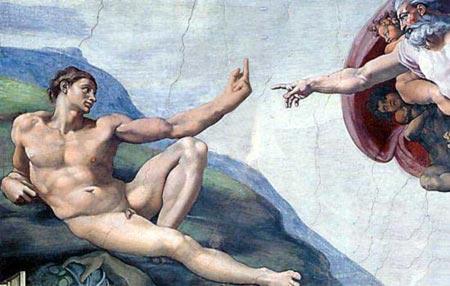
The secret of Dahl's charm, and Wonka's, is that neither one seems to be an entirely nice person. Or, rather, neither has much use for the condescending sweetness that some adults adopt in the belief that children will mistake it for niceness. Dahl's sensibility was gleefully punitive; he was a scourge of bullies, brats and scolds, and a champion of unfussy decency against all manner of beastliness.
...
Mr. Depp, in a recent interview, has dropped the name of the Vogue editor Anna Wintour. To me, the lilting, curiously accented voice sounded like an unholy mash-up of Mr. Rogers and Truman Capote, but really, who knows?
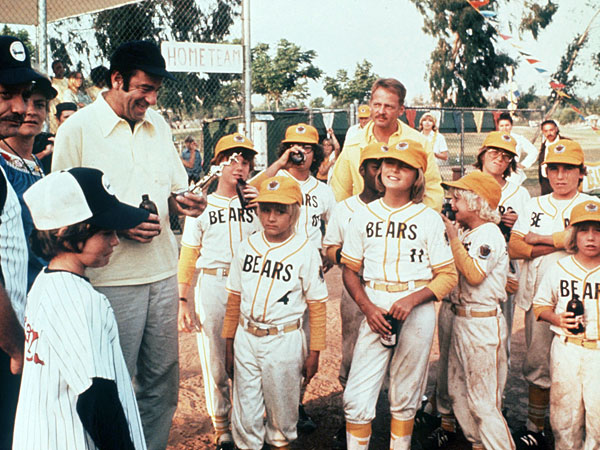
Early Russian literature was intimately connected to the Europeanizing and liberal tendency of the "Decembrist" revolution of 1825, which was enthusiastically supported by Pushkin and his inheritor Lermontov. And the debt of those rebels to Byron's inspiration was almost cultish in its depth and degree.Speaking of cultish worship, Che Guevara is quoted as an authority in a New York Times piece on the peculiar nature of the Iraqi "insurgency":
If the insurgency is trying to overthrow this regime, it is contending with a formidable obstacle that successful rebels of the 20th century generally did not face: A democratically elected government. One of the last century's most celebrated theorists and practitioners of revolution, Che Guevara, called that obstacle insurmountable.The Decembrists of course weren't facing an elected government and the revolution they fought for wouldn't happen for almost another century. Of Lermontov's death by duel, Hitchens writes,
"Where a government has come to power through some form of popular vote, fraudulent or not, and maintains at least an appearance of constitutional legality," he wrote, "the guerrilla outbreak cannot be promoted, since the possibilities of peaceful struggle have not yet been exhausted."
When Lermontov was brought to the field of honor he apparently declined to fire on the fool who had provoked the duel. Slain on the spot, he never heard the czar's reported comment: "A dog's death for a dog." His unflinching indifferece on the occasion, however, drew on two well-rehearsed nineteenth-century scenarios: The contemptious aristocrat on the scaffold, and the stoic revolutionary in front of the firing squad. The Decembrists, in their way, admired and emulated both models.The anti-American revolt in Iraq, which mainly targets Iraqis, is a nihilistic, sectarian variation on the unflinching indifference of the classic revolutionary.
Chappelle may be America's most incisive and original comic mind on issues of class and race, but that's not what frat boys are thinking about when they buy his DVDs. It's "I'm Rick James, bitch," all the time. Chappelle made his own choices, and, like the rest of us, he has to live with the consequences, even if he is better funded. It's not our fault.Pollack does recognize Chappelle's unique talent, but he's hinting that Chappelle is sort of a sell-out and that his current troubles may be a result of that "choice." I don't see Chappelle as a sell-out at all. Anyone who can include "incisive and original" bits on race, class and politics in their comedy in today's America isn't.
I mention Hitchens often because he's so knowledgeable and knows how to think, a potent mixture."Thou knowest the commandments, Do not commit adultery, Do not kill, Do not steal, Do not bear false witness, Honor thy father and thy mother." And he said, "All these have I kept from my youth up." Now when Jesus heard these things, he said unto him, "Yet lackest thou one thing: sell all that thou hast, and distribute unto the poor, and thou shalt have treasure in heaven: and come, follow me." (Luke 18:20-22)...It turns out that the Eleventh Commandment is not "Thou shalt speak no ill of fellow Republicans," but is, rather, a demand for the most extreme kind of leveling and redistribution.
I have never understood why conservative entrepreneurs are so all-fired pious and Bible-thumping, let alone why so many of them claim Jesus as their best friend and personal savior. The Old Testament is bad enough: The commandments forbid us even to envy or covet our neighbor's goods, and thus condemn the very spirit of emulation and ambition that makes enterprise possible. But the New Testament is worse: It tells us to forget thrift and saving, to take no thought for the morrow, and to throw away our hard-earned wealth on the shiftless and the losers."
Bin Laden and most militant Islamists [are] motivated by . . . their hatred for a few, specific US policies and actions they believe are damaging - and threatening to destroy - the things they love. Theirs is a war against a specific target and for specific, limited purposes. While they will use whatever weapon comes to hand - including weapons of mass destruction - their goal is not to wipe out our secular democracy, but to deter us by military means from attacking the things they love. Bin Laden et al are not eternal warriors; there is no evidence that they are fighting for fighting's sake, or that they would be lost for things to do without a war to wage. . . . To understand the perspective of the [tens or hundreds of millions of] supporters of Bin Laden, we must accept that there are many Muslims in the world who believe that US foreign policy is irretrievably biased in favor of Israel, trigger happy in attacking the poor and ill-defended Muslim countries, Sudan, Iraq, Afghanistan, Somalia, and so forth; rapacious in controlling and consuming the Islamic world's energy resources; blasphemous in allowing Israel to occupy Jerusalem and US troops to be based in Saudi Arabia; and hypocritical and cruel in its denial of Palestinian rights, use of economic sanctions against the Muslim people of Iraq, and support for the Muslim world's absolutist kings and dictators.This is the mentality Hitchens has been fighting against and why he gets so nasty. As bad as America's foreign policy can be, there are a number of distortions in the seemingly reasonable paragraph above. America's foreign policy should be better for its own sake, not because Al Qaeda hit us and threatens to do worse.
One doesn't have to read the manuscript terribly closely to see how it provides some benefit to the CIA. Critical as Anonymous [Scheuer] is of his own organization - as well as of the Bush and Clinton administrations - he absolutely blasts the FBI on pages 185 through 192. Many progressives may not cotton to the broad notion he advances here - namely, that the US should simply dispense with any sort of legalistic, law-enforcement approach to combating Al Qaeda and leave it entirely to the covert operators. But in the context of Washington's political postmortems on 9/11-related intelligence failures, this is stuff that at least makes the FBI look worse than the CIA.The irony perhaps is that Hitchens has argued strenuously against torture and disregarding what makes the West more defensible in leftists' eyes than, say, the Taliban or Saddam Hussein or the genocidaires of Sudan.
Ten years ago Mayor Daley in a little City Hall ceremony gave me a five hundred dollar check on behalf of the Midland Authors' Society. 'Mr. Mayor, have you read Herzog?' asked one of the reporters standing by. 'I've looked into it.' said Daley, yielding no ground. Art is not the Mayor's dish. But then why should it be? I much prefer his neglect to the sort of interest Stalin took in poetry, phoning Pasternak to chat with him about Mandelstam and, shortly afterwards, sending Mandelstam to die.Well, yeah. But no doubt this is a reason "Crony Capitalism" outlived "Communism."
I can't resist adding two more themes from Bellow's triumph in 1953. One is a hatred of workhouse condescension towards the underclass: 'Something in his person argued what the community that contributed the money wanted us poor bastards to be: sober, dutiful, buttoned, clean, sad, moderate.Hence his appreciation of grifters, conartists, and fixers in all their complexity. (Quote from a Hitchens review of Ravelstein.)
He believed in the individual's quest for integrity and love, guided by the great writers but not overwhelmed by them, learning from the swindlers but not driven to despair by them.
"She was willing to be one of the earliest and most articulate voices" opposing the administration's policies, Mr. Greenwald said. "Every time I'd call and ask her to do something, whether it was a small radio station in Kansas or a rabid right-wing talk show, she didn't hesitate. She was totally fearless."And Matt Stone and Trey Parker's movie Team America, drew blood.
Which isn't to say that Ms. Garofalo enjoys being a target. When "Team America: World Police," from the "South Park" creators Trey Parker and Matt Stone, hit movie theaters last year, it featured a Janeane Garofalo marionette whose head was blown off. The real Ms. Garofalo, hearing this from a friend, promptly burst into tears.A year ago, she was a talk-radio novice:
"The first few weeks were pretty awkward," she confessed. They still sputter and stutter a fair amount, and Ms. Garofalo berates herself because "my mind starts racing and I try to fit 15 thoughts into one sentence."(On the subject of talk radio, see this very interesting Atlantic Monthly cover story by David Foster Wallace.) "An HBO documentary chronicling [Air America's] early tumult, "Left of the Dial," will have its premiere on Thursday.
Within hours [Bush] turned Ms. Schiavo into a slick applause line at a Social Security rally. "It is wise to always err on the side of life," he said, wisdom that apparently had not occurred to him in 1999, when he mocked the failed pleas for clemency of Karla Faye Tucker, the born-again Texas death-row inmate, in a magazine interview with Tucker Carlson.
There were no weapons of mass destruction to destroy. Worse, the specialized machinery and highly lethal conventional weaponry that Saddam Hussein did control was looted during the invasion and is now very likely in the hands of terrorists. As James Glanz and William Broad reported in The Times, among the things missing is high-precision equipment capable of making parts for nuclear arms. The WMD argument was not only wrong, but the invasion might have also created a new threat.I'm curious as to what Clinton's director of central intelligence George "Slam Dunk" Tenet would make of this paragrah. Did he know about the "high-precision equipment capable of making parts for nuclear arms"? Does the NYTimes's point seem slightly contradictory? The problem is that much of the left believed Saddam Hussein to be "contained" and underestimate how dangerous he was. They can't be proven wrong on this point since now we'll never know what Saddam Hussein would have done had he remained in power. We do know for a fact that after his years of exhorbitant behavior, including the genocide of the Kurds; the annexation of Kuwait; the slaughter of the Shia in the south; the ecological destruction of the Kuwaiti oil-fields and Marsh Arab ecosystem, he was surrounded by no-fly zones in the North and South of Iraq, US army bases to the West in Saudia Arabia and a hostile Iran to the East. With all of this, he still wouldn't come clean about his pursuit and/or possession of WMDs. This is all well-established fact.
Even without such literal intrusions on his privacy, Perowne's right to forget is constantly being assailed by the promptings of his own ethical imagination. His son, Theo, protected by the self-absorption of youth, manages to shut out the large, grim stuff of world affairs through his ability to ''think small'' -- concentrating on the short-range pleasures offered by an upcoming snowboarding trip or a new girlfriend. Perowne's mother, too, is afforded a kind of serenity by old age and senility. But for an able, sentient adult like Perowne, empathetic engagement with the world -- and all the moral confusion that such engagement entails -- is not really a choice. He cannot help seeing things from the viewpoints of others: his children, his mother and his Iraqi patient, whose stories of torture in one of Saddam's prisons have persuaded him that the invasion of Iraq is probably a good idea. Empathy, once granted admission, has a way of multiplying its demands. While buying the ingredients for a fish stew he plans to make for supper, Perowne ponders the latest scientific research indicating that fish have a higher degree of capacity for pain than has previously been assumed. ''This,'' he thinks, ''is the growing complication of the modern condition, the expanding circle of moral sympathy. Not only distant peoples are our brothers and sisters, but foxes too, and laboratory mice, and now the fish.'' If empathy is the antidote to cruelty, the essence of what it is to be human, how far to extend it? To fish? To foxes? To jihadists who wish you dead?
At the State Department, Bolton, a protégé of Vice- President Dick Cheney, has behaved more like a grandstander at a conservative think tank than like a diplomat. Colin Powell endured the collateral damage caused by his outbursts, but Rice made it plain that she would have none of it, and passed over Bolton for Deputy Secretary of State. Cheney reportedly then insisted that Bolton get the U.N. When Madeleine Albright and Richard Holbrooke were appointed U.N. Ambassadors, President Clinton announced the nominations. Bush did the same for his first-term nominees, John Negroponte and John Danforth. Rice, in naming Bolton herself, sent a not so subtle signal that she expects to remain boss.
On an unseasonably mild day last August, a small group of Prime Minister Rafik Hariri's closest political allies could tell from his flushed face and subdued manner that something awful had happened in the Syrian capital of Damascus, where he had been summoned to a meeting with President Bashar al-Assad.Assassinations are not unheard of in the Middle East. Israel assassinated leaders of Hamas recently, as well as other members of the resistance. The difference one could argue, is that Hariri was resisting by peaceful means.
...
After a few moments, he leaned forward and described how the Syrian leader had threatened him, curtly ordering him to amend Lebanon's Constitution to give President Émile Lahoud, the man Syria used to block Mr. Hariri's every move, another three years in office.
"Bashar told him, 'Lahoud is me,'" Mr. Jumblatt recalled in an interview. "Bashar told Hariri: 'If you and Chirac want me out of Lebanon, I will break Lebanon.'" He was referring to the French president, Jacques Chirac.
In the month since Mr. Hariri was assassinated, members of Lebanon's anti-Syrian opposition have pointed to that Aug. 26 encounter in Damascus as fateful. Although opposition leaders acknowledge that they lack firm evidence tying Syria or its Lebanese agents directly to Mr. Hariri's assassination, they link that day to his slaying on Feb. 14.
...
Syria is used to acting with impunity in Lebanon.
But by 2004, the Lebanese were expecting something different from Mr. Assad, not least because the United States had signaled by invading Iraq that business as usual was unacceptable.
...
The end for Mr. Hariri as prime minister came in October after the Syrians sent him a message to step aside. He resigned on Oct. 20, somewhat relieved, his aides said.
The next months were consumed mostly with planning for parliamentary elections due in the spring and wrangling over the election law. The Syrians were trying to gerrymander districts around Beirut and the rest of the country to weaken the opposition. But the Christian-Sunni Muslim-Druse coalition appeared to grow ever more formidable.
During this period, while he was planning his comeback, Mr. Hariri seemed to become his old self again, friends and allies said. Mr. Renaud, the European Union ambassador, recalls visiting him at his combined office and mansion right after Christmas and seeing him emerge from behind his desk waving a sheaf of papers and grinning, saying, "We are going to win the elections!"
...
By late January, Mr. Hariri was feeling confident enough that he decided he would not accept any Syrian-nominated members on his election list, his advisers say. His 19-member bloc in Parliament included three men chosen by Rustom Ghazale, the head of Syrian intelligence based in Anjar in the Bekaa region, and the man Lebanese believe really ran their country, his aides said.
Mr. Hariri invited Mr. Ghazale to lunch in late January and told him about the decision.
"They were not happy," said Ghazi Aridi, a former minister of information who resigned in September over the Lahoud extension. He recalls Mr. Ghazale telling Mr. Hariri, "You have to think about it and we have to think about it."
It was beginning to look like the opposition could capture about 60 seats in the 128-seat Parliament, enough to elect a president other than Mr. Lahoud. Around this time, Mr. Hariri and Mr. Jumblatt, the Druse leader, had a meeting. Mr. Hariri's earlier confidence that he would not be assassinated had slipped; the two men figured one or the other would be killed soon.
"Any field where you challenge them, they get mad," Mr. Jumblatt said. "Such totalitarian regimes cannot understand that you can have the freedom to chose your own M.P.'s, or you choose your own local administrators or I don't know what."
Two weeks after that conversation, the huge bomb that rocked all of Beirut struck Mr. Hariri's motorcade. He, along with 18 other people, died.
(emphasis mine)
Jaafari: Iraq headed toward Religious LawHowever the NYTimes reports:
...Prospective Iraqi prime minister Ibrahim Jaafari has given an interview to Der Spiegel, to appear Tuesday, in which he says his government will press for the implementation of religious law in personal status matters:
'"It's understandable in a country where the majority of people are Muslim . . . Iraq should become a Muslim country but without falling under the influence of Iran or Saudi Arabia . . . Everyone will have the same rights, even members of the many minor religious communities," he said, explaining there would be multiple forms of jurisprudence.'
American and Iraqi officials say that in a gesture to the Kurds, leaders of the Shiite alliance, which has 140 seats in the assembly, have signaled that they will not press for Islam to be the central source of power in a new government, but the Kurds are holding out for an independent Kurdish militia and effective control of Kirkuk."Jaafari: Iraq headed toward Religious Law in Personal Status Matters" just doesn't have the same ring to it. Are "Personal Status Matters" a central source of power for a government? I'd agree with the pro-choice movement that they are.