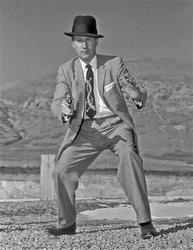
Mira Sorvino's two-part series Human Trafficking begins tonight. Her breakout role was as a prostitute in Mighty Aphrodite, but before that she was in Barcelona.
Well, Saddam Hussein really cared about deterring the Persians – the Iranians – and his own people. He didn’t give a hang about us except on occasion. And so he had to convince those audiences that he still was a powerful man. So who better to do that through than the INC, Ahmad Chalabi and his boys, and by spoofing our eyes in the sky and our little HUMINT, and the Brits and the French and the Germans, too. That’s all I can figure.
The consensus of the intelligence community was overwhelming. I can still hear George Tenet telling me, and telling my boss in the bowels of the CIA, that the information we were delivering – which we had called considerably – we had called it very much – we had thrown whole reams of paper out that the White House had created. But George was convinced, John McLaughlin was convinced that what we were presented was accurate. And contrary to what you were hearing in the papers and other places, one of the best relationships we had in fighting terrorists and in intelligence in general was with guess who? The French. In fact, it was probably the best. And they were right there with us.
In fact, I’ll just cite one more thing. The French came in in the middle of my deliberations at the CIA and said, we have just spun aluminum tubes, and by god, we did it to this RPM, et cetera, et cetera, and it was all, you know, proof positive that the aluminum tubes were not for mortar casings or artillery casings, they were for centrifuges. Otherwise, why would you have such exquisite instruments? We were wrong. We were wrong.

Destruction leads to a very rough road
But it also breeds creation
And earthquakes are to a girl's guitar
They're just another good vibration
And tidal waves couldn't save the world
From Californication
We went to a shopping mall
And laughed at all the shoppers
And security guards trailed us
To a record shop
We asked for Mojo Nixon
They said "He don't work here"
We said "If you don't got Mojo Nixon
Then your store could use some fixin'"
We got into a car
Away we started rollin'
I said "How much you pay for this?"
She said "Nothing man, it's stolen"

"But clearly Simon Wiesenthal haunted his quarry. One of Mengele's fanatical Nazi protectors in Brazil, Wolfgang Gerhard, said he had dreamed of hitching Mr. Wiesenthal to an automobile and dragging him to his death."
"It was a matter of pride and satisfaction, he said in 1995, as he approached his 87th birthday, that old Nazis who get into quarrels threaten one another with a vow to go to Simon Wiesenthal."

U.S. Says It Has Killed No. 2 Qaeda Operative in Iraq
BAGHDAD, Iraq, Sept. 27 - ...
As insurgent attacks continued across Iraq today, American and Iraqi officials offered further details about the killing on Sunday of Abu Azzam, whom they described as the top lieutenant of Abu Musab al Zarqawi, the leader of Al Qaeda in Mesopotamia.
Also today, the renegade Shiite cleric Moktada al Sadr issued an unusual public request for guidance on how to deal with Mr. Zarqawi, who declared a "full-scale war" on all of Iraq's Shiites two weeks ago.
Days after his declaration of war, Mr. Zarqawi issued a qualifier, exempting certain groups including followers of Mr. Sadr, who has sometimes allied with Sunni fighters in his resistance to the American presence here.
Seemingly embarrassed by that exemption, Mr. Sadr publicly sought guidance on how to fight Mr. Zarqawi's attacks from Grand Ayatollah Ali al-Sistani, Iraq's most revered Shiite cleric.
The ayatollah responded in an unusually lengthy statement, in which he repeated his previous counsel to Iraqis to "continue in their self restraint, along with more caution and alertness." Mr. Sistani also said that the insurgents' purpose was to "start the fire of civil war in this beloved country," and that Iraqis must not allow them to succeed. He called on the government to protect Iraqis, and on the courts to speed up their work in trying and sentencing those accused of murder.


On February 1, 2005, Lieutenant General Mattis, speaking to a forum in San Diego, apparently said "You go into Afghanistan, you got guys who slap women around for five years because they didn't wear a veil. You know, guys like that ain't got no manhood left anyway. So it's a hell of a lot of fun to shoot them." "Actually, it's a lot of fun to fight. You know, it's a hell of a hoot. It's fun to shoot some people. I'll be right upfront with you, I like brawling." Mattis' remarks sparked controversy, and General Michael W. Hagee, Commandant of the Marine Corps, issued a statement suggesting that Mattis should have chosen his words more carefully, but would not be disciplined.
General Mattis popularized the slogan "no better friend, no worse enemy" among his command. This phrase became central in the investigation into the conduct of Lieutenant Ilario Pantano, a platoon commander serving under General Mattis. Lieutenant Pantano shot a pair of prisoners on April 15, 2004. He said that he thought they represented a threat. Lieutenant Pantano emptied two entire magazines into their bodies, because he wanted "to leave a message". He then scrawled General Mattis's slogan over the bodies.
EDIT: He is portrayed by Robert John Burke in the HBO miniseries Generation Kill.

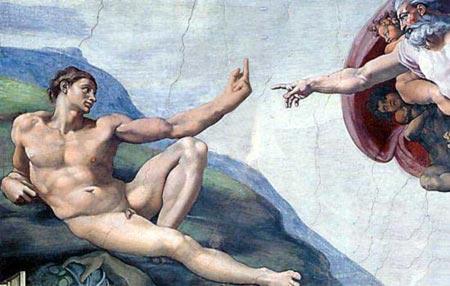
The secret of Dahl's charm, and Wonka's, is that neither one seems to be an entirely nice person. Or, rather, neither has much use for the condescending sweetness that some adults adopt in the belief that children will mistake it for niceness. Dahl's sensibility was gleefully punitive; he was a scourge of bullies, brats and scolds, and a champion of unfussy decency against all manner of beastliness.
...
Mr. Depp, in a recent interview, has dropped the name of the Vogue editor Anna Wintour. To me, the lilting, curiously accented voice sounded like an unholy mash-up of Mr. Rogers and Truman Capote, but really, who knows?
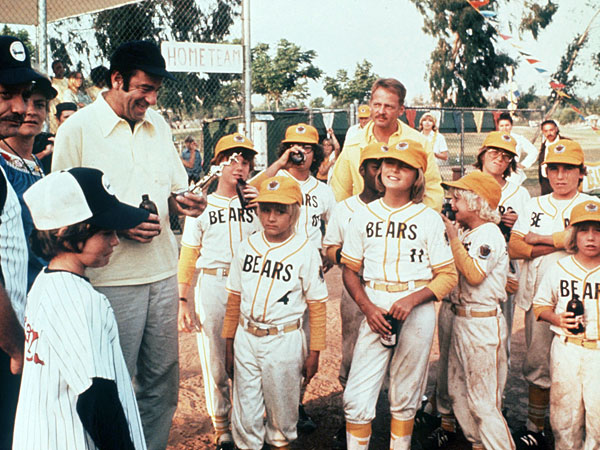
Early Russian literature was intimately connected to the Europeanizing and liberal tendency of the "Decembrist" revolution of 1825, which was enthusiastically supported by Pushkin and his inheritor Lermontov. And the debt of those rebels to Byron's inspiration was almost cultish in its depth and degree.Speaking of cultish worship, Che Guevara is quoted as an authority in a New York Times piece on the peculiar nature of the Iraqi "insurgency":
If the insurgency is trying to overthrow this regime, it is contending with a formidable obstacle that successful rebels of the 20th century generally did not face: A democratically elected government. One of the last century's most celebrated theorists and practitioners of revolution, Che Guevara, called that obstacle insurmountable.The Decembrists of course weren't facing an elected government and the revolution they fought for wouldn't happen for almost another century. Of Lermontov's death by duel, Hitchens writes,
"Where a government has come to power through some form of popular vote, fraudulent or not, and maintains at least an appearance of constitutional legality," he wrote, "the guerrilla outbreak cannot be promoted, since the possibilities of peaceful struggle have not yet been exhausted."
When Lermontov was brought to the field of honor he apparently declined to fire on the fool who had provoked the duel. Slain on the spot, he never heard the czar's reported comment: "A dog's death for a dog." His unflinching indifferece on the occasion, however, drew on two well-rehearsed nineteenth-century scenarios: The contemptious aristocrat on the scaffold, and the stoic revolutionary in front of the firing squad. The Decembrists, in their way, admired and emulated both models.The anti-American revolt in Iraq, which mainly targets Iraqis, is a nihilistic, sectarian variation on the unflinching indifference of the classic revolutionary.