Tuesday, October 11, 2011

Cyclical and Secular Trends

After saying Ezra Klein's narrative and tour d'horizon of Obama's economic policy is ultimately a white wash, I feel compelled to quote the parts which I thought were excellent. Afterwards I'll coment on David Leonhardt's essay "The Depression: If Only Things Were That Good." Leonhardt is writing for the New York Times and Klein is writing for the Washington Post so perhaps both felt the necessity to add some "balanced" comments so that their worthwhile insights don't appear too controversial or partisan. This is probably why Klein's piece ends up feeling like a white wash. Leonhardt's piece starts off shaky but gets better at the end. I'd cut the two some slack given the state of newspapers these days, but that's just me.

Let me first say I'm sympathetic to Obama and I admire the advisers he picked like Romer, Bernstein, and Goolsbee and I'm less down on Orszag, Summers, Geithner, and Bernanke than others have been.

First off, Klein is right to report that other respected forecasters were in agreement with the administration's analysis of the downturn.
But Romer wasn’t trying to be alarmist. Her numbers were based, at least in part, on everybody else’s numbers: There were models from forecasting firms such as Macroeconomic Advisers and Moody’s Analytics. There were preliminary data pouring in from the Bureau of Labor Statistics, the Bureau of Economic Analysis and the Federal Reserve. Romer’s predictions were more pessimistic than the consensus, but not by much.
Granted the "consensus" was all wrong about the housing bubble, but still. Klein could have pointed this out, but it would have called into question the authority of the Washington Post. 
By that point, the shape of the crisis was clear: The housing bubble had burst, and it was taking the banks that held the loans, and the households that did the borrowing, down with it. Romer estimated that the damage would be about $2 trillion over the next two years and recommended a $1.2 trillion stimulus plan. The political team balked at that price tag, but with the support of Larry Summers, the former Treasury secretary who would soon lead the National Economic Council, she persuaded the administration to support an $800 billion plan.
So the damage was $2 trillion and they were going with 800 billion which was whittled down by the Senate to 700 billion with a large part being ineffective tax cuts? What if it was an "L-shaped" recovery as in the early 1990s and early 2000s, the last two recessions? What if recovery took longer because it followed a financial crisis as shown in Rogoff and Reinhart's book "This Time It's Different"? Klein writes that everyone underestimated the amount the economy shrank:
To understand how the administration got it so wrong, we need to look at the data it was looking at.
The Bureau of Economic Analysis, the agency charged with measuring the size and growth of the U.S. economy, initially projected that the economy shrank at an annual rate of 3.8 percent in the last quarter of 2008. Months later, the bureau almost doubled that estimate, saying the number was 6.2 percent. Then it was revised to 6.3 percent. But it wasn’t until this year that the actual number was revealed: 8.9 percent. That makes it one of the worst quarters in American history. Bernstein and Romer knew in 2008 that the economy had sustained a tough blow; t hey didn’t know that it had been run over by a truck.
So was Romer's $2 trillion estimate off the mark? What makes Klein's story better than most is the following:
There were certainly economists who argued that the recession was going to be worse than the forecasts. Nobel laureates Krugman and Joe Stiglitz were among the most vocal, but they were by no means alone. In December 2008, Bernstein, who had been named Biden’s chief economist, told the Times, “We’ll be lucky if the unemployment rate is below double digits by the end of next year.”
The Cassandras who look, in retrospect, the most prophetic are Carmen Reinhart and Ken Rogoff. In 2008, the two economists were about to publish “This Time Is Different,” their fantastically well-timed study of nine centuries of financial crises. In their view, the administration wasn’t being just a bit optimistic. It was being wildly, tragically optimistic.
He'll acknowledge the existence of "Cassandras" even if he doesn't highlight how the consensus - whose figures he's citing - had been wrong about the housing bubble and deregulation, etc. Klein quotes Orszag's mea culpa:
I don’t think it’s too much of an exaggeration to say that everything follows from missing the call on Reinhart-Rogoff, and I include myself in that category,” says Peter Orszag, who led the Office of Management and Budget before leaving the administration to work at Citigroup. "I didn’t realize we were in a Reinhart-Rogoff situation until 2010.
I like that Klein quotes critics who have been right about a lot like Stiglitz and Baker. Here they comment on Reinhart-Rogoff:
Yet even among economists who admire Reinhart and Rogoff’s work, there is skepticism.
One source comes in how Reinhart and Rogoff find the economic phenomena they’re trying to study. “There’s an identification problem,” Stiglitz says. “When you have underlying problems that are deep, they will cause a financial crisis, and the crisis itself is a symptom of underlying problems.”
Another is in their fatalism. “I don’t buy their critique in the sense that this was an inevitability,” says Dean Baker, director of the Center for Economic and Policy Research and one of the economists who spotted the housing crisis early.
Klein gets a gold star for that third paragraph. I remember very well when Bernanke was asked about Reinhart-Rogoff and he deadpanned in response "yes policy makers usually don't respond well to financial crises and their aftermath" which is why it takes a while for the economy to recover after they occur. He was probably thinking of Japan. I could be wrong but I don't believe Reinhart and Rogoff emphasized the failure of policy makers in their publicity for the book. They seemed fatalistic as Baker points out.

Klein reports that the stimulus was too small:
Critics and defenders on the left make the same point: The stimulus was too small. The administration underestimated the size of the recession, so it follows that any policy to combat it would be too small. On top of that, it had to get that policy through Congress. So it went with $800 billion — what Romer thought the economy could get away with — rather than $1.2 trillion — what she thought it needed. Then the Senate watered the policy down to about $700 billion. Compare that with the $2.5 trillion hole we now know we needed to fill.
Klein doesn't really emphasize the point, but the administration should have gone back for more or done more unilaterally or at least refrain from talking of green shoots and cutting government spending.

Some more good info Klein highlights is the Federal Reserve and inflation.
There was, however, one institution that some think could have reduced the debt overhang crushing the economy and that didn’t face such political obstacles: the Federal Reserve.
The central bank manages the nation’s money supply and credit and sits at the center of its financial system. Usually, it spends its time guarding against the threat of inflation. But in December 2008, Rogoff argued that the moment called for the reverse strategy.
“It is time for the world’s major central banks to acknowledge that a sudden burst of moderate inflation would be extremely helpful in unwinding today’s epic debt morass,” he wrote.
...
Rogoff scoffs at this. “Creating inflation is not rocket science,” he wrote. “All central banks need to do is to keep printing money to buy up government debt. The main risk is that inflation could overshoot, landing at 20 or 30 percent instead of 5 or 6 percent. Indeed, fear of overshooting paralyzed the Bank of Japan for a decade. But this problem is easily negotiated. With good communication policy, inflation expectations can be contained, and inflation can be brought down as quickly as necessary.”
Klein could have mentioned Volcker's success. In fact we need Bernanke to get some Volckerian resolve. But at least he discusses the Federal Reserve. Usually liberals and progressives neglect to mention it.

Another good idea Klein raises is Germany's work-sharing:
Germany’s response to the recession included a work-sharing program that subsidized salaries when employers trimmed the hours of individual workers to keep more people on the job. If workers attended job training, the government gave a more generous subsidy.
The program worked. Even though Germany’s economy was devastated by the recession — declining by almost 7 percent — the jobless rate fell slightly, from 7.9 percent at the start of the recession to 7 percent in May 2010.
There are reasons to question whether work-sharing programs would have been as effective here as they were in Germany. For one thing, they work best in sectors where jobs are bound to return after a recession — such as Germany’s export sector — rather than sectors that need to be downsized after being inflated by a credit boom.
Germany also has a different labor market. Employers, unions and the government work together with an unusual level of cooperation. The culture is much more hostile toward layoffs than the United States’ is, which has caused Germany problems in the past but has been a boon throughout this recession.
But paying the private sector to save jobs was not the administration’s only option. There was also the possibility of simply paying workers to work.
For one thing, the government could have refused to fire anyone. Says Baker, of the Center for Economic and Policy Research: “We’ve lost 500,000 state and local jobs, and before that, we were creating 160,000 a year. If we hadn’t had those losses and had done more to keep creation at that pace, we would have almost another million jobs.”
It also could have started hiring. Romer, for instance, proposed to add 100,000 teacher’s aides. Imagine similar proposals: Every park ranger could have had an assistant park ranger. Every firefighter station could have added three trainees. Every city could have expanded its police force by 5 percent. Everyone between ages 18 and 26 could have signed up for two years of paid national service.
Another idea Klein could have touched on is FDR's mistaken turn towards deficit cutting in 1937. Klein could have been clearer on the numbers, too. First Romer says a $2 trillion dollar hole. How does that relate to the shrinking economy in the last quarter of 2008? Then Klein says $2.5 trillion and finally he mentions the loss of $8 trillion in housing wealth.

However, if you read between the lines, it's quite a good article all in all, not perfect, but thorough.

------------------------------------------

Leonhardt's piece comparing the Great Depression with today is shorter but good also. Leonhardt starts off comparing the 1930s with today.
Economists often distinguish between cyclical trends and secular trends — which is to say, between short-term fluctuations and long-term changes in the basic structure of the economy. No decade points to the difference quite like the 1930s: cyclically, the worst decade of the 20th century, and yet, secularly, one of the best.
It would clearly be nice if we could take some comfort from this bit of history. If anything, though, the lesson of the 1930s may be the opposite one. The most worrisome aspect about our current slump is that it combines obvious short-term problems — from the financial crisis — with less obvious long-term problems. Those long-term problems include a decade-long slowdown in new-business formation, the stagnation of educational gains and the rapid growth of industries with mixed blessings, including finance and health care.
Together, these problems raise the possibility that the United States is not merely suffering through a normal, if severe, downturn. Instead, it may have entered a phase in which high unemployment is the norm.
I just don't agree with this. Christina Romer doesn't and I don't believe Leonhardt himself does either.
On Friday, the Labor Department reported that job growth was mediocre in September and that unemployment remained at 9.1 percent. In a recent survey by the Federal Reserve Bank of Philadelphia, forecasters said the rate was not likely to fall below 7 percent until at least 2015. After that, they predicted, it would rarely fall below 6 percent, even in good times.
Well they've been wrong before. Leonhardt discusses education:
Despite the media’s focus on those college graduates who are struggling, it’s not much of an exaggeration to say that people with a four-year degree — who have an unemployment rate of just 4.3 percent — are barely experiencing an economic downturn.
Maybe Obama is less concerned about unemployment than he ought to be because all of the states that voted for Obama in 2008 had high levels of college graduates, especially the new purple states like Virginia. (This is why they took out no insurance after passing the stimulus.) They are counting on these states to win in 2012. (Granted Obama is more concerned than Republicans. Plus median incomes have fallen 10 percent or so since the beginning of the recession. That should hurt Obama's prospects. The one downside in an Obama victory will be the analyses of those who argue high unemployement doesn't matter.)
Economic downturns do often send people streaming back to school, and this one is no exception. So there is a chance that it will lead to a surge in skill formation. Yet it seems unlikely to do nearly as much on that score as the Great Depression, which helped make high school universal. High school, of course, is free. Today’s educational frontier, college, is not. In fact, it has become more expensive lately, as state cutbacks have led to tuition increases.
Beyond education, the American economy seems to be suffering from a misallocation of resources. Some of this is beyond our control. China’s artificially low currency has nudged us toward consuming too much and producing too little. But much of the misallocation is homegrown.
In particular, three giant industries — finance, health care and housing — now include large amounts of unproductive capacity. Housing may have shrunk, but it is still a bigger, more subsidized sector in this country than in many others.
This is the Leonhardt I've grown to admire. These are the long-term "structural" problems with the U.S. economy.
Health care is far larger, with the United States spending at least 50 percent more per person on medical care than any other country, without getting vastly better results. (Some aspects of our care, like certain cancer treatments, are better, while others, like medical error rates, are worse.) The contrast suggests that a significant portion of medical spending is wasted, be it on approaches that do not make people healthier or on insurance-company bureaucracy.
In finance, trading volumes have boomed in recent decades, yet it is unclear how much all the activity has lifted living standards. Paul A. Volcker, the former Fed chairman, has mischievously said that the only useful recent financial innovation was the automated teller machine. Critics like Mr. Volcker argue that much of modern finance amounts to arbitrage, in which technology and globalization have allowed traders to profit from being the first to notice small price differences.
IN the process, Wall Street has captured a growing share of the world’s economic pie — thereby increasing inequality — without doing much to expand the pie. It may even have shrunk the pie, given that a new International Monetary Fund analysis found that higher inequality leads to slower economic growth.
The common question with these industries is whether they are using resources that could do more economic good elsewhere. “The health care problem is very similar to the finance problem,” says Lawrence F. Katz, a Harvard economist, “in that incredibly talented people are wasting their talent on something that is essentially a zero-sum game.”
In the short term, finance, health care and housing provide jobs, as their lobbyists are quick to point out. But it is hard to see how the jobs of the future will spring from unnecessary back surgery and garden-variety arbitrage. They differ from the growth engines of the past, which delivered fundamental value — faster transportation or new knowledge — and let other industries then build off those advances.
Obamacare and Frand-Dodd are good steps in the right direction but not enough. The housing bubble was deflating on its own and jobs were moving to other sectors until the financial crisis hit.
The rate at which new companies are created has been falling for most of the last decade. So has the pace at which existing companies add positions. “The current problem is not that we have tons of layoffs,” Mr. Katz says. “It’s that we don’t have much hiring.”
If history repeats itself, this situation will eventually turn around. Maybe some American scientist in a laboratory somewhere is about to make a breakthrough. Maybe an entrepreneur is on the verge of creating a great new product. Maybe the recent health care and financial-regulation laws will squeeze the bloat.
For now, the evidence for such optimism remains scant. And the economy remains millions of jobs away from being even moderately healthy.
What is needed is more government spending to help with aggregate demand and for Bernanke to get some Volckerian resolve. Inflation will help with deleveraging and inflation will get those sitting on money to invest and spend. It will boost the velocity of money.

Ideally, we would have a 21st century WPA program which could be modeled on the way the National Science Foundation doles out grants.
Steve Jobs' 10 favorite albums:
  1. Rolling Stones "Some Girls"
  2. Grateful Dead "American Beauty"
  3. Cat Stevens "Tea for the Tillerman"
  4. Peter, Paul and Mary "Around the Campfire"
  5. Jackson Browne " Late for the Sky"
  6. John Lennon "Imagine"
  7. Glenn Gould "Bach: The Goldberg Variations"
  8. Miles Davis "Kind of Blue"
  9. Bob Dylan "Highway 61 Revisted"
  10. The Who "Who's Next"
Adam Serwer: Conservative Pundit Says "Get A Job Hippies!"
    "L" not "V" shaped recovery 
    (or Obama was smokin' some of that Hawaiian green shoots)

    DeLong : More Evidence That Obama Tacked in the Wrong Direction at the End of 2010...
    … and replaced a team where at least some key senior players knew what they were doing with one in which nobody in the inner circle did.
    ...

    I'm sorry, but no. Even if you think in 2009 that there will be a "V"-shaped recovery, you take steps in 2009 so that you can do the needed policy in 2010 if the "V"-shaped recovery does not materialized. You:
    • Make sure the chair of the Federal Reserve does not regard the avoidance of absolute deflation as a reason to sit on his hands.
    • Make sure the Fed chair is backed up by governors who understand the Federal Reserve's dual mandate.
    • Prepare to do quantitative easing via the Treasury by using TARP authority money as mezzanine financing.
    • Prepare to do infrastructure investment via the Treasury by using TARP authority money as mezzanine financing.
    • Prepare to intervene in the housing market on a very large scale by getting Fannie and Freddie in shape to do so.
    • Pass a budget resolution early in 2010 so that you can do expansionary policy via Reconciliation later on if you need to.
    Those are six things you do in 2009 (and at the start of 2010) to prepare for an "L"-shaped recovery. Obama did zero of them.
    Tim Duy (via Mark Thoma):
    "Sure, we can argue that Republican intransigence is the core policy problem. But at the same time, the Administration had no back-up plan for an L-shaped recovery, joined the fiscal austerity parade, and continued to place faith in reaching a "Grand Bargain" on the debt rather than focusing on the issue at hand - the unemployment crisis."
    Yglesias:

    Recessions, you can see, happen when total nominal spending growth dips. But it normally bounces back. During 2009, however, we had an unprecedented collapse in total nominal spending. What’s more, the 2010 “recovery” year was just as bad as normal recession years. So now look at the large and growing gap between the actual path of total nominal spending and the 5 percent trend growth rate:
    This is what’s not accounted for in the Bernstein/Romer projection. There is no X-Force driving convergence to the long-term trend. The failure of the X-Force to materialize has nothing to do with the fact that the Commerce Department initially underestimated the depth of the recession. The existence of the X-Force was a modeling assumption, not an empirical calculation. And I think it’s an assumption that’s best understood as an assumption about the stance of the Federal Reserve—a view that the Fed, with its words and deeds, would push us back up to the trend leaving Congress with the responsibility for safeguarding human welfare during the transition. It’s an assumption that I think anyone familiar with Ben Bernanke’s academic work would have shared, so I understand why Romer especially (who shares my view of the situation) espoused it. But of course she’s gone, and I’m not sure that references to “headwinds” from Europe fully accounts for the depth of the problem here.

    Monday, October 10, 2011

    comments from Jared Bernstein on Ezra Klein's narrative

    But I’ve come to view the deleveraging point as only one part of the problem, and one that’s actually hard to parcel out from the lousy jobs market, which is the main constraint on consumers.  The Fed’s debt service ratio—the share of income households are spending to service their debt—is the lowest it’s been since the mid-90s (though the fact that it’s still falling suggest the deleveraging cycle isn’t over).

    I think the bigger problem is in the banks, and it’s born of that extremely combustible combination: debt and psychology.  When an equity (as opposed to a debt) bubble pops, markets move quickly to mark down the asset inflation born of speculation.  A share of stock in some worthless fad that was worth $1,000 on Monday can be worth $1 by Friday.
     
    Debt bubbles don’t work that way.  Debt-based assets don’t get “marked-to-market” in the same way as stocks.  De-nile ain’t just a river, and banks who hold such assets can engage in “extend and pretend” in a way they can’t when an equity bubble pops.  This is especially the case in a housing bubble.  Holders of non-performing mortgages that are deeply underwater—and more than half of the 11 million underwater mortgages are more than 25% below sea-level—convince themselves that these assets turned liabilities will resurface and sail again someday.
     
    And in fact, some will.  But many won’t and to admit that and mark them down means the bank needs to find more capital to keep its balance sheet in shape.  Basically, a debt bubble injects human nature into the problem, and our nature is to cross our fingers and engage in magical thinking about zombie assets coming back life.
    ...
    First, the fact that we failed to recognize the depth of the recession was not at the heart of the problem.  Other trusted voices—Klein mentions Krugman and Stiglitz (I’d add Dean Baker and Larry Mishel)—were warning that things were going to be worse than our forecast, and we heard them.  I myself, as quoted in Ezra’s piece, told the NYT in December of 2008: “We’ll be lucky if the unemployment rate is below double digits by the end of next year.”  (And see footnote 1 in Romer/Bernstein, e.g.)
    We wanted to the largest package we could get and that was arguably what we ended up with.  Moreover, the damn thing worked pretty much like we thought it would.   Our mistake was failing to follow up on the initial success.

    As Carmen Reinhart herself says in the piece, the Recovery Act prevented recession from morphing into depression.  The engine was racing in reverse, and our actions and those of the Fed shifted it into neutral, where we’ve been stuck ever since, and stuck at an unacceptably high level of under-capacity.

    What kept us from doing more?  In fact, we did do more, but again, not enough.  We extended unemployment benefits, the first time homebuyers credit, the Hire Act, the payroll tax holiday, a small business lending bill, and more.
    ...
    So part of our problem is that nobody does counterfactuals—what would have occurred absent the intervention.  That’s understandable, and we should have tried harder to communicate that issue to the public.  Still, I’m not sure if we could have made a difference.  I do know that talking about green shoots didn’t help (I remember some critic at the time suggesting that we must be smoking green shoots).

    But I actually think the “green shoots” mistake is an important hint.  One reason to go there is because if you believe things are truly getting better—if you really think that soon the private sector can pick up the growth baton—then you can pivot away from spending toward deficit reduction.  And the internal desire to do that is always strong in the White House—at times like this, too strong.
    This isn’t just an Obama issue.  FDR did the same thing.
    ...
    In other words, one of the reasons we historically under-react to economic downturns is an irrational fear of temporary deficit spending.  The main question we want to ask both back then and right now is not “is the deficit getting too large” but “is it large enough?”  As long as the economy is operating under capacity and the spending is temporary—think Recovery Act, not Bush tax cuts—to do too little in the name of deficits, bond vigilantes, and Treasury rates (which are now at historic lows), is to condemn millions to unnecessary unemployment, declining living standards, and even, in the case of the young, permanent scarring.

    I’ll have a lot more to say about this in an article coming out soon in the journal Democracy, and it’s but one of many dynamics that contributes to the immunity that Klein discusses.  And, yes, for many in Congress it’s a tactic—they don’t care about the deficit other than its use a cudgel against doing something to help someone other than their funders.  But as long as we fail to understand the dynamics of deficits—their need to expand as much as necessary in bad times and contract in good ones—we will never be able to meet the market failures we face now or in the future.
    (And I deleted the Yglesias CAP blog link in the right column because of his shitty comment system. Bye Matt. Best of luck.)
    article on Hitchens by Charles McGrath

    Sunday, October 09, 2011

    Ezra Klein's narrative is better informed than most, but ultimately a white wash.

    Here's a Krugman post from January, 2009.
    So this looks like an estimate from the Obama team itself saying — as best as I can figure it out — that the plan would close only around a third of the output gap over the next two years.
    One more point: the estimate of what would happen to the economy in the absence of a stimulus plan seems kind of optimistic. The chart above has unemployment ex-stimulus peaking at 9 percent in the first quarter of 2010 and coming down through the year; the CBO estimates an average unemployment rate of 9 percent for 2010, so the Obama people are more optimistic than the CBO, and a lot more optimistic than I am.
    Bottom line: even if I use the Romer-Bernstein estimates instead of my own — there really isn’t much difference — this plan looks too weak.
    Krugman comments on Klein's analysis

    Dean Baker comments

    Saturday, October 08, 2011

    Friday, October 07, 2011

    Krugman: Monetary Base and Prices
    Brad DeLong: "Why LM Is Still Here"
    Let me be the first to say that I really, really wish the Federal Reserve would pull a Paul Volcker--would change its operating procedures--and announce that it will buy as many risky and long-duration assets for cash as it needs to in order to push market expectations of nominal GDP five years hence back to its pre-2008 trend level of $18 trillion/year.
    That's going on my poster: "Gentle Ben: We Need You to Pull A Volcker!"

    My favorite poster so far: "Fuck Opportunistic Disinflation - It's a Dual Mandate!"

    Thursday, October 06, 2011

    I have David Wessel's book In Fed We Trust: Ben Bernanke's War on the Great Panic and it's good reading. The story about the panic is pretty well known now and was even dramatized in HBO's Too Big To Fail. On the back of In Fed We Trust are blurbs by Joseph Stiglitz, Thomas Ricks, N. Gregory Mankiw and Ron Suskind.

    I went to the local Barnes and Noble to skim Suskind's new book Confidence Men and it was better than the impression I got from the reviews. He does seem to make some fundamental mistakes and has an antipathy towards Summers, but apparently Summers was behind a bigger stimulus and a Swedish type solution and he wanted to be Fed Chair. Obama wanted stability and to stay the course but perhaps it was a mistake. Certainly Summers would be under even more fire now than Bernanke but maybe Summers would have done more as Fed Chair. Anyway Suskind seemed to want better economic policy than we got and his heart was in the right place even though his various critics may be right, probably are right. Suskind would endorse OWS I imagine.

    I searched the pages listed in the index for Bernanke and according to Suskind Obama never really talked to him.  Apparently Bernanke was tacitly backing Geithner in most things, but otherwise he's in the background. Maybe to maintain independence?

    Via Delong, David Wessel on What the Fed Might Do:
    Wessel: The Fed is not out of ammo, the economists at the Bank Credit Analyst insist, but….
    There are three potential ‘nuclear options’ at the Fed’s disposal that could have a major impact on economy activity,
    writes Peter Berezin, managing editor of the Montreal-based monthly report.
    Unfortunately, all three options would be hard to implement and carry significant risks.
    The three:
    • Target a higher inflation rate or pre-specified level for the consumer price index or nominal gross domestic product. Problem: “could undermine the Fed’s long-standing commitment to price stability.”
    • Stimulate bank lending by putting a tax on excess reserves, hoping that banks will the lend out the money if the have to pay borrowers to take the loans. Problem: “could lead to the collapse of money market funds and the disintermediation of the financial system.”
    • Buy corporate debt, equities, real estate or foreign currency. Problem: Could require an act of Congress. “Given that the U.S. economy remains stuck in a liquidity trap,” Berezin concludes, “fiscal policy would be the most straightforward way to stimulate….However, the likelihood that the U.S. will receive major fiscal stimulus anytime soon is close to zero.”
    His bottom line: “The recovery remains subpar” and the stock market “characterized more by volatility than a clear upward trend.”
    Says DeLong: "I see no risks in attempting any of these three--and great risks in continuing to dither"
    Don't Let Monetary Policy Off the Hook by Tim Duy

    Brilliant post. Supposedly Republicans are worried about government debt and concerned about the Fed causing inflation/destroying the economy. The Fed's actually creating debt Japan-style and enacting opportunistic disinflation. Republicans are wrong twice over.

    Wednesday, October 05, 2011

    Robert Solow reviews Sylvia Nassar's Grand Pursuit: The Story of Economic Genius

    (via Mark Thoma)


    The Demand Doctor: What would John Maynard Keynes tell us to do now—and should we listen? by John Cassidy

    IS-LM by DeLong

    The Fed Drops the Ball by Tim Duy

    Bernanke Urges Obama and Congress to Do More for Economy by Binyamin Appelbaum
    In recent speeches, Mr. Bernanke had suggested that the economy did not need much more help, and that growth would pick up speed so long as the government did not interfere, for example, by making sharp cuts to short-term spending. But the Fed, like many private sector forecasters, has been too optimistic in its predictions over the last two years, repeatedly overestimating the pace of growth.

    Tuesday, October 04, 2011

    Bernanke testifies to Congress (via Calculated Risk):
    Monetary policy can be a powerful tool, but it is not a panacea for the problems currently faced by the U.S. economy. Fostering healthy growth and job creation is a shared responsibility of all economic policymakers, in close cooperation with the private sector. Fiscal policy is of critical importance, as I have noted today, but a wide range of other policies--pertaining to labor markets, housing, trade, taxation, and regulation, for example--also have important roles to play. For our part, we at the Federal Reserve will continue to work to help create an environment that provides the greatest possible economic opportunity for all Americans.
    Emphasis added. Didn't a lack of regulation get us into this mess? The housing bubble was allowed to inflate and an unregulated shadow banking system that's vulnerable to a Diamond-Dybvig-type crisis was allowed to arise. So when the bubble popped we had a classic bank run. And yet too much regulation is a problem?

    It wouldn't be too much of a problem if he had adequate fiscal and monetary policy. But Republicans are blocking fiscal stimulus and the Fed feels its doing enough as long as the economy doesn't sink into a deflationary trap.

    Sunday, October 02, 2011

    What Would Keynes Do? by Thomas Geoghegan


    Famous samurai duel: Miyamoto Musashi VS Sasaki Kojiro via Krugman.


    Mavis Staples played the Hideout Blockparty back on September 24th and the beer lines and portopotty lines were really long. Waiting in line I met a pretty young lady named Ivy. The next night I ran into her again with her friend Brian at a small show put on by Lætitia Sadier. Yesterday I ran into them again at the free "Cultivate Festival" which had the White Rabbits and Calexico. Calexico did an excellent cover of Love's "Alone Again Or" (see above.) Brian said he was at the Onion A.V. Club Blockparty with Archers of Loaf back on the 11th. Ivy was at the Beirut concert, the night after Sadier's show. We joked about what's next on the calendar.*

    --------------------
    *Ivy mentioned Ryan Adams.

    Saturday, October 01, 2011

    Wall Street Occupiers, Protesting Till Whenever

    Henwood on protests over the NYPD's heavy-handed tactics

    and a summary of sorts:

    Can You Hear Them Now? by Peter Catapano
    Jared Bernestein answers some questions
    Q: What is the mechanism by which higher incomes from increases in productivity get back to workers?
    A: Well, the problem is: it doesn’t.  I mean, sometimes it does, and it should, but in recent decades, productivity growth has diverged from the compensation and incomes of middle- and lower-income families.  This is really another way of saying inequality has grown.
    ...
    But of course one of the characteristics of growing inequality is that the average is less descriptive of outcomes throughout the income scale.  For years, through the 1950s and 60s, real MEDIAN family income kept pace with productivity growth—both about doubled in those years.  But since then, median family income has grown about one-third as fast as productivity growth.
    What changed?  A lot—fewer unions, the shift from manufacturing to service jobs (hastened by the increase in trade with lower wage nations), outsized returns to folks in certain sectors, like finance, and the growth of the educational advantage, to name some of the more important factors.
    But no small part of this disconnect comes under the heading of “bargaining clout.”  The benefits of productivity growth don’t naturally flow to those responsible for said growth.  Some people have to fight for it.  And I’m not just talking unions here. 
    I think one of the most important answers to your question is “full employment.”  Labor markets were much tighter during the period noted above when median incomes grew with productivity, and when they got that tight for a moment in the latter 1990s, low- and middle-earnings again begin to rise with productivity.
    In those years, employers had to bid compensation up to get and keep the workers they needed.  In that way, low unemployment was the “mechanism” you seek.  And yes, it’s been very much missing ever since.
    This is a "structural" problem. Funny how conservatives only refer to "structural" problems when they're used as reasons for the futility of government action. During the Presidential campaign Obama referred to this structural problem in interviews with business and economics reporters for newspapers and magazines.. Supposedly in the Suskind book Obama is quoted as saying there's a productivity problem with labor, but maybe he was referring to that.

    Thursday, September 29, 2011

    Yglesias reflects on the Internet bubble and 1998
    People recall that the stock market went way down and then the economy never got as hot as it was in the late-1990s again, so the conventional thing is to say “bubble” and roll our eyes at all those old New Economy articles. But there was this deliberate decision to slow the economy down. And it’s not like having achieved whatever they were trying to achieve, the Fed then managed to flip the growth switch back on post-recession.
    And links to a Justin Fox piece circa 1998:
    If you look beyond postwar U.S. history, however, you can come up with very different patterns. Economist John Makin of the American Enterprise Institute sees the current expansion as an investment-led, inflation-free "golden age" similar to the U.S. scene in the 1920s and Japan's in the 1980s. Both those booms ended badly, of course--but they didn't end in bursts of inflation. James Paulsen, chief investment officer at Norwest Investment Management, looks back even further, to the U.S. in the second half of the 19th century. That was a period of no inflation, revolutionary technological advances, massive global capital flows, and rapid economic growth--and was also characterized by devastating spells of deflation.
    What else happened in the 90s and early 00s? In 1997 there was the East Asian Financial crisis. And Long Term Capital Management hedge fund bust. China decided never to be put in the position to be forced to go to the IMF and so helped cause the Global Savings Glut. Could that be the x-factor? In 2000 Greenspan argued that the bubblicious Bush tax cuts were advisable because no government debt would be bad (Clinton had balanced the budget.) So is Yglesias saying the Fed didn't push down the accelerator in the Bush years? My guess is that he feels the Bush years were not boom years.
    Plosser: Recent Stimulus Will Hurt the Fed's Credibility

    (via Mark Thoma)

    Maybe Fisher, Plosser and the other guy with the alphabet soup name drew short straws at a meeting of the FOMC. Maybe they're all in agreement but they drew straws to decide who would go out and give public speeches which reflect Republican wishes for inaction in order to avoid drawing political heat and maintain independence. Makes as much sense as the notion that they actually believe what they are saying.
    Iraq calls for change of Syrian Regime
    Karl Smith on inflation

    (via DeLong)

    Wednesday, September 28, 2011

    Tim Duy on one of the 3 Fed dissenters
    Krugman:

    Indeed, my sense is that international macroeconomists — people who followed the ERM crises of the early 1990s, the Latin American debt crisis, the Asian crisis of the late 90s, and so on — were caught much less flat-footed than economists who limited most of their interest to the United States. The now-infamous 2003 Lucas remark about how the problem of depression-prevention has been solved was not something you would have heard from an economist who had paid attention to Mexico, Indonesia, Argentina etc..
    Unfortunately, many economists have not learned from the past. And that’s at least part of the reason we are apparently condemned to repeat it.
    Fed's Rosengren: Housing and Economic Recovery by Calculated Risk

    The little bit of good news is that Residential Investment will make a positive contribution to growth this year (mostly from multi-family and home improvement), and construction employment will probably increase this year (not much).
    Richard Koo on government spending:
    Indeed the key lesson from the Japanese experience is that fiscal support must be maintained for the entire duration of the private-sector deleveraging process. This is an extremely difficult task for a democracy in a peacetime, because when the economy begins to recover, well-meaning citizens who dislike reliance on government will argue that since fiscal pump-priming is clearly working, it is time to reduce (what they see as wasteful) government spending. But if the recovery is actually due to government spending and the private sector is still in balance-sheet-repair mode, premature fiscal reform will invariably result in another meltdown, as the Japanese found out in 1997 and the Americans in 1937…
    Although government deficit spending should be avoided when the private sector is healthy and forward looking, once in several decades when the private sector gets carried away in a bubble and damages its financial health, a prompt and sustained fiscal medicine from the government is essential in minimizing both the length of recession and the eventual bill to the taxpayers.
    (via Mike Konczal, via DeLong)
    Blogs Yglesias: "John Judis in TNR, taking advantage of some kind of perestroika in the Richard Just Era: "In 1947, the United States faced a very similar situation in the UN and took exactly the opposite position—to the benefit of Palestine’s Jewish population."

    New Republic intern Matt O'Brien writes on "Why Did Republicans Turn Against the Fed?"
    As Ken Rogoff, a professor of public policy and economics at Harvard and the former chief economist of the IMF, told me, “If the shoe were on the other foot and a Republican were in the White House, we might see different rhetoric.” Similarly, Scott Sumner, a professor of economics at Bentley University and author of the influential blog The Money Illusion, pointed out that “people on the right were pushing for monetary stimulus in the 1980s when inflation was much higher than it is now”—and a Republican was, coincidentally, in the White House.
    To others, however, a purely cynical explanation of Republican antipathy towards the Fed does not seem sufficient. Rather, deeper philosophical and psychological factors—and factions—unleashed by the Great Recession seem to figure in as well. For one, notes University of Oregon economics professor Mark Thoma, the latest financial crisis has empowered fringe elements of the GOP—those who ascribe pseudo-mystical properties to gold and the gold standard—to take center stage within the party. In particular, this libertarian faction has offered up an alternative explanation of the crash that, as Thoma explained to me, provides “a nice moral with a villain you can point to.” Whereas the Friedmanite wing of the GOP traditionally absolved markets from blame for financial crises by saying the Fed had failed to do enough, this faction preferred to blame the Fed and other government institutions for doing too much. According to this line of argument, Fannie Mae and Freddie Mac caused the housing bubble, Obamacare and Dodd-Frank legislation are holding back the recovery, and the Federal Reserve’s panoply of lending programs during the height of the panic merely bailed out Wall Street and forestalled the necessary restructuring of the banking system. It’s a seductive—and reassuring—argument for those who take as gospel the Reagan maxim that “government is not the solution to our problem; government is the problem.”
    Of course, the Federal Reserve invited some of this backlash with the opaque nature of its emergency programs in late 2008 and early 2009. The urgency of the crisis made the Fed’s ability to act without Congressional approval attractive to policymakers, but in doing so, the central bank usurped some functions that typically are the province of the Treasury. “It’s absolutely true that the Fed made itself vulnerable to [attacks] by starting fiscal policy and preserving the banking sector,” says Rogoff. Republican leaders have harped on this notion that the Fed continues to overstep its mandate. For instance, the bank’s quantitative easing (QE) programs, which entail buying long-term bonds, have drawn ire from Republicans, as have other supposed instances of the Fed dabbling in fiscal policy. Representative Paul Ryan slammed the Federal Reserve in an op-ed for what “looks like an attempt to bail out fiscal policy” by purchasing longer-dated Treasuries. The implication was clear: Ben Bernanke is complicit in Obama’s interventionist, big government agenda.
    And then, finally, there are the inflation hawks. The idea that inflation can be too low is counterintuitive to the average voter, who associates inflation with less discretionary income. The simple calculus, as Sumner told me, is that “more inflation is bad and less is good.” The psychological scars of the stagflationary 1970s magnify this predisposition. “Most of the people in power remember waiting in gas lines,” says Thoma. The result, in Thoma’s estimation, is that “our collective memory is more European than it’s ever been, in terms of remembering the evils of inflation.” This thinking epitomizes what National Review senior editor Ramesh Ponnuru told me amounts to “an ongoing calcification of conservative economic thought.” Ponnuru describes this mindset as the idea that “the solution to a weak economy in the late 1970s, when the economic views of today’s conservatism formed, was cutting the top marginal tax rate and tightening money; therefore it must be the solution today.”

    It is not clear if this intellectual Dark Age will pass. Bernanke has become such a persona non grata in Republican circles that it is easy to forget he is a Republican. Among these competing theories for Republican Fed-bashing, the scariest, of course, is that the attacks are not just cynical, but represent genuine belief. It’s enough to make a liberal long for Milton Friedman.
    Roubini calls the double-dip
    (via DeLong)*

    Along with the Clash, one of my favorite bands** is Stereolab. This past Sunday I saw Stereolab's lead vocalist Lætitia Sadier play a small venue. On Monday she opened for Beirut at a much larger concert hall. The crowd Monday was very young and had maybe a 60-40 female-male ratio. Both nights Sadier played a solo version of the Stereolab tune "International Colouring Contest." "Ping Pong" appears on the same album and the lyrics seem relevant:
    it's alright 'cos the historical pattern has shown
    how the economical cycle tends to revolve
    in a round of decades three stages stand out in a loop
    a slump and war then peel back to square one and back for more
    bigger slump and bigger wars and a smaller recovery
    huger slump and greater wars and a shallower recovery
    you see the recovery always comes 'round again
    there's nothing to worry for things will look after themselves
    it's alright recovery always comes 'round again
    there's nothing to worry - things can only get better
    there's only millions that lose their jobs
    and homes and sometimes accents
    there's only millions that die in their bloody wars,
    it's alright
    it's only their lives and the lives of their next of kin
    that they are losing
    it's only their lives and the lives of their next of kin
    that they are losing
    it's alright 'cos the historical pattern has shown
    how the economical cycle tends to revolve
    in a round of decades three stages stand out in a loop
    a slump and war then peel back to square one and back for more
    bigger slump and bigger wars and a smaller recovery

    huger slump and greater wars and a shallower recovery
    don't worry be happy things will get better naturally
    don't worry shut up sit down go with it and be happy
    dum, dum, dum, de dum dum, de duh de duh de dum dum dum... ah ah
    dum, dum, dum, de dum dum, de duh de duh de dum dum dum... ah ah
    ------------
    * I doubt it. The Fed caused the last two double dips in the late 50s and early 80s and the authorities have learned their lesson over Lehman and won't allow Greece to be another Lehman.
    **probably my favorite band
    I saw Moneyball which was funny. Interesting that Billy Beane's office had a photo of a mohawked Joe Strummer and a Clash poster.

    Jonathan Lehman on Moneyball.
    The End of History?

    As Scorn for Vote Grows, Protests Surge Around Globe

    Saudi Men Go to Polls; Women Wait
    CAIRO — Saudi men voted in local elections on Thursday for just the second time in the history of the conservative kingdom, but the polls remained closed to a majority of the Saudi population, including women, who were promised the right to vote in municipal elections scheduled for 2015 in a royal decree issued last week.
    The elections were for local advisory councils with no lawmaking authority or ability to alter the status quo in one of the world’s few remaining absolute monarchies. Also barred from voting were men employed by the police and security forces as well as all men under the age of 21. Official figures estimate the number of eligible voters to be 1.2 million out of more than 18 million Saudi citizens.

    Tuesday, September 27, 2011

    Monday, September 26, 2011


    Love Again.

    Sunday, September 25, 2011


    China, Driver of World Economy, May Be Slowing

    America's Chinese disease by Krugman
    Obama's Jobs Plan Deserves a Hearing by Christina Romer
    Come Down to My Level

    Whatever Happened to the American Left by Michael Kazin

    But who's the real criminal? It's me, isn't it? by Daniel Davies

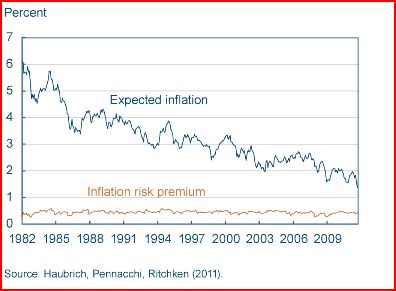
    The Era of Ever-Falling Inflation Expectations by Yglesias


    Looks like the chart of the decline of organized labor or of the influence of the Left.

    Saturday, September 24, 2011


    I guess I'm confused over the housing sector. Here's some confusion from the other day. DeLong discusses it here in the context of the 3 Fed dissenters. 

    Philadelphia Fed Presiendt Charles Plosser said in an interview that " This mess was caused by over-investment in housing, and bringing down unemployment will be a gradual process."

    DeLong responds:
    It is, I must say, remarkable that Plosser has managed to avoid learning that the housing bust since 2007 has been much larger than the mid-2000s housing boom, and that there is no overhang of overbuilt houses, rather the reverse:

    FRED Graph  St Louis Fed 97 2
    The story goes:

    1) boom in residential construction (in blue)

    2) spawns a bubble which takes on a life of its own

    3) consumers use houses like ATM machines

    In a comment at Crooked Timber Daniel Davies writes
    The fact that houses became so expensive is hardly unrelated to the fact that financial means were created which then allowed people to bid the prices up further.
    I don’t really agree, (surprisingly) – the price bubble was policy-caused. In the early 00s, when I started covering the UK banking industry in serious depth, the main upward driver of house prices was simply the fact that (as base rate plummeted to the historically low level of 4%!) they were so, so damn affordable – remember that mortgage rates went from nearly 10% to about 5% on a simple, vanilla standard variable rate mortgage, basically halving the monthly payment. The product innovations were a response to, not a cause of, the housing boom (in Spain, where financial regulation was and is very strict, they still had a housing boom on 100% vanilla products).
    Is what Davies says related to the Global Savings Glut? After witnessing the 1997 East Asian financial crisis, the Chinese - who avoided the worst because of capital controls - decided they would never ever be put in a position to be forced to go to the IMF and so built up their reserves. This caused mortgage rates to drop.

    In 2005 what happens? Housing bubble deflates. Exports and business investment continue to grow. Unemployment level remains unchanged and people lose jobs and others are hired. Then in 2008 as the bubble deflates, financial institutions are put under pressure. Bear Stearns is bailed out. Lehman isn't and there's a panic, a run on the shadow banking system and a credit crunch. All sectors decline. Fiscal stimulus by the White House and Congress and monetary stimulus by the Federal Reserve stops the credit crunch and causes the economy to recover although growth is at a painfully slow pace and far from catching up to trend levels.


    Spain's Banking Mess by Floyd Norris

    Friday, September 23, 2011

    The Myth of Cash on the Sidelines


    Bubblicious
    (or This Time It's Different)

    NY Fed's Duddley: Financial Stability and Economic Growth by Calculated Risk
    "[W]hen [bubbles] are underway, [they] are typically enjoyable. As a result, regulatory interventions that temper booms normally are going to be unpopular."

    From NY Fed President William Dudley: Financial Stability and Economic Growth. Dudley makes several interesting comments. I've long argued that the primary causes of the housing bubble were rapid innovation in the mortgage market combined with a lack of regulatory oversight.
    Ron Suskind's Larry Summers problem by Ezra Klein

    Good piece by Klein. From what I've heard, the book makes Summers and Obama look better a little bit. (Summers argued for more stimulus. Obama leaned towards the Swedish model and was impressed with Elizabeth Warren.) It makes Orszag look worse. Regarding nationalization of the banks, I thought Obama was undecided but apparently he had the right instincts. At the time I leaned slightly towards the Geithner view that given the fragile state of things, a nationalization could bring about a panic like Lehman Brothers or a Greek default. Better to err on the side of caution but proponents of nationalization had some good points. In hindsight I've changed my view especially given the behavior of bank CEOs and their lobbyists since then.

    Was the timing of the release of the book with its portrayal of a mildly frat-house-like White House and the historic ending of DADT a coincidence?

    I don't understand why everyone in the book is saying they were misquoted. Maybe at the the time they gave quotes they thought Obama was shoe-in for re-election and now they feel Obama could lose and are feeling disloyal?
    Martin Scorsese documetary on George Harrison
    review of Moneyball by Manohla Dargis
    Like “The Social Network,” which is about the creation of Facebook and yet so much more (it was also written by Mr. Sorkin) “Moneyball” is about a fundamental cultural shift and the rise of the information elite. Instead of going by instinct, Peter knows what he knows because he’s a disciple of Bill James, a once-marginal figure who, starting in 1977, began publishing an abstract that offered a new, rationalized way of looking at the game. In a nutshell, Mr. James looked at baseball statistics in a different light, less by breaking the numbers down in another way but by seeing that what appeared to be objective facts, like fielding statistics, were, as he wrote, “a record of opinions.” And these numbers didn’t just describe baseball; they gave the game its language, its “fiction and drama and poetry.”
    Like a linguist Mr. James studied that language, looked at its form, context, meaning, and called his new approach sabermetrics. Among other things he could see value in underappreciated, often underpaid and ignored players whom conventional thinkers saw as destined for the minors. In the movie Peter preaches this new gospel to Billy, who embraces it with born-again fervor, partly because it clarifies the mystery of why he never became the player he was drafted to be: he had the tools, as the scouts like to say, but they just didn’t work in the majors. (In reality it was a former general manager of the A’s, Sandy Alderson, now with the Mets, who introduced Mr. Beane to Mr. James’s work.)
    Reminds me of progressives like Yglesias and Ezra Klein and their recourse to data and charts, especially during the health care debate. In macroeconomics, though freshwater economists lost their way by focusing too much on models and equations.
    Origins of the Euro Crisis by Krugman

    Reminds me of the 1997 East Asian financial crisis and others have pointed to the Latin American debt crisis of the 1980s.
    U Mad Bro? 
    (or why so serious?)

    Krauthammer in Full Rant Mode by Dean Baker

    Krauthammer is a longstanding member of my rogues gallery so it's good to see Obama's rhetoric sending him into fits of rage.

    Thursday, September 22, 2011

    Young Adults Make Gains in Health Insurance Coverage

    Housing Boom / Housing Bubble

    Be Warned: Mr. Bubble is Worried Again by David Leonhardt (August 21, 2005)


    Robert Shiller's graph of housing prices ending in 2005 or so.

    This post is sort of free-floating working-out of my ideas on the issues. The context of this is series of back and forth blog posts between Matt Yglesias and Doug Henwood. Yglesias's first post is a reaction to a piece by Jeffrey Sachs published in the Huffington Post. Right off the bat, I'm distrustful of Sachs and more trusting that Yglesias will be correct. They're both liberals so they both want the same things or ends, but Sachs can be all over the place and became famous after putting the Russian people through the wringer via "Shock Therapy." My view is that he had sort of a crisis of conscience over the experience and became more liberal if not really that rigorous in his thinking. I could be wrong. Also, Huffington Post will publish good stuff, but also will run hokey stuff. So my BS detector is on high alert. Anyway Sachs writes:
    The housing boom between 1998 and 2008 was an indirect reaction to the loss of manufacturing. As the US shed manufacturing jobs in the 1980s and 1990s, the Federal Government and Federal Reserve tried to compensate by boosting jobs in construction and other sectors shielded from international competition (so-called non-traded sectors). The Fed cut interest rates and the White House and Congress promoted housing finance, including through reckless deregulation and irresponsible behavior by government-backed entities like Fannie Mae. These efforts produced a temporary boom in housing, followed by the bust in 2008.
    Obama and his advisors have believed, in effect, that they can reignite the housing boom. Rather than reacting to the underlying problem -- the loss of manufacturing competitiveness -- they have acted as if a bit of pump priming and the passage of time will recreate consumer-led growth in housing, autos, and other sectors.
    Yet this approach has been doomed to fail, and continues to do so. Consumers will not return quickly to buying houses, cars, and other big-ticket items in large numbers. They are exhausted and in debt, and in no mood to repeat the earlier disasters of over-borrowing.

    Ygelsias argues there wasn't a boom in housing, but a boom in prices or a bubble. Doug Henwood responds to this. He's usually pretty good, but can bitchy towards others like Yglesias. Henwood's response is that there was a boom, along with a bubble. A bubble starts with a boom and then takes on a life of its own. And then as far a I can tell Yglesias responds and agrees there was a boom but that it wasn't that big. Henwood says it was pretty big:
    To reprise a couple of points from yesterday’s post: 1) As a share of GDP, residential investment—that is, the building of new houses and work done on older ones—hit a peak of almost 60% above its long-term trend in the mid-00s. And, 2) between 2001 and 2006, residential investment accounted for 12% of GDP growth, twice its share of the economy. If “60%” and “twice” don’t sound like big numbers, then I don’t know what does.
    See where I'm confused is where inflated prices work into the equation of residential investment. Is the bubble reflected in the numbers? And when working with fractions and percentages it gets kind of tricky. My guess is that Yglesias doesn't want to admit there was a boom of any sort in the Bush years, but maybe that's not fair or true.

    Calculated Risk* has had some interesting posts on the housing market. The construction industry builds a certain number of houses a year to keep up with new housing formation. Because of the crisis and bust, there's a big overhang of available housing. Once that is worked through, which will be slower than the past because of a slowdown in household formation, the construction industry will start building again to meet demand and create jobs and more demand. New construction won't be at the boom level of the past though because there won't be the boom level of demand in new housing formation. Dean Baker repeatedly points out at his blog that housing prices need to come down to their trend before the market can turnaround. I admittedly don't have a handle on it.

    But back to Sach's long history. It interesting that Sachs says the boom is from 1998-2008 whereas Henwood says 2001-2006. There was an Interent bubble in the late Nineties and then a mild crash. Sachs says the US shed manufacturing jobs in the 1980s and 1990s and I guess it's true, although the 1990s had a period of growing wages and full employment during the Clinton years right before the Internet bubble burst. Sachs asserts that the government created the housing boom through design and I don't know if that's quite true. There was the Global Savings Glut which lowered mortgage rates and the Bush tax cuts and the weakening of loan restrictions so that more people could pile on debt. Was this a housing boom policy or more accidental? Growth would have been worse with out these things. I agree that Clinton and Bush both pushed "the American Dream" with more access to housing with the Bush administration probably inflicting more unintended consecquenses.

    Sachs says this "artificial" housing boom demand won't be replaced so the Obama administration's "pump-priming" is futile. He argues they need to address the long-term structural problems of "competitiveness" and the loss of demand caused by the loss of manufacturing jobs. Dean Baker has pointed to the trade deficit.

    Maybe after priming the economy won't pick back up to its previous boom levels, but after financial crises economies do usually come back (except Japan of course). The world economies came back after the Great Depression but only because of the pump-priming of war time spending and moentary policies.

    In sum, I agree that there's a lack of demand because consumers were relying on credit during the boom years and they are not now. Plus the loss of demand cause by job losses and government budget cuts. But it's also the case that the fear caused by the crisis and recession is making credit and spending less than they need be. The Fed and White House pump-priming are trying to get people to be less cautious and help them deleverage. There's no reason why corporations and people with money are sitting on it, demanding safe places to park it and low returns, other than the fact that they are anxious and see years of slow growth ahead.
    ---------------------
    *This might be wrong. It's not that there's an overhang, it's that prices are too high and demand is too low. Anyway I'm confused.


    Greece might default.
    For the moment, Greek officials are adamant that neither a default nor a euro exit and devaluation is in the cards. One senior policy maker in Greece’s Finance Ministry, who declined to be identified because of the delicacy of the matter, even offered to send his questioner a case of 2005 Dom Perignon Champagne if Greece ever repudiated its debt.
    But close followers of Greece’s budget dynamics point to the fact that, despite the country’s deficit woes, by next year Greece is likely to have achieved a primary budget surplus, meaning that after taking out the high levels of interest it pays on its debt, it will be running a surplus.
    History shows that a country tends only to take such a drastic step as cutting ties with its international lenders when it has tightened its belt enough to achieve a budget surplus, and it is only payments to its bankers that is keeping it in the red.
    Such was the case in most of the recent country defaults, including Argentina, Ecuador, Indonesia and Jamaica, economists at the I.M.F. found in a paper published last year that addressed when a country finds its interest is served by default.
    “My view is that it is very much in Greece’s interest to default now, as there is no prospect that it can repay its debt,” said Desmond Lachman, a former I.M.F. economist at the American Enterprise Institute. “If it is inevitable that an insolvent Greece is going to have to restructure, it would be better for Greece to do it now.”
    FT Alphaville:

    The Oregon Office of Economic Analysis has ventured an update to Carmen Reinhart and Ken Rogoff’s ‘This Time it’s Different‘, the seminal work on financial crises of the past – and their related analysis on the aftermath of financial crises.

    The OOEA* uses both updated and revised data and, mostly, confirm that while things have of course gotten worse, they’re still inside the historical norms. For example, equity price declines:
    Update crisis duration - Oregon Office of Economic Analysis
    Indeed, for most of the key measures used by Reinhart and Rogoff, the OOEA finds newer data only reconfirms the US is experiencing a “garden variety” of financial crisis, as the original works indicated.
    The summary of the new data comes out like this:

    Oregon Office of Economic Analysis - Reinhart/Rogoff update - summary
    However… there’s one area in that list in which the current US appears to be significantly better than the crises past: unemployment.
    While it looks terrible in the context of past US recessions…
    Oregon Office of Economic Analysis - US unemployment compared to past US recessions

    So far, at least, the US has done reasonably well in terms of unemployment, when compared to global precedents:

    Oregon Office of Economic Analysis - historical comparison of recent US unemployment to global financial crisis

    It probably won’t be much comfort to anyone in these economic times, but interesting, nonetheless.
    Interesting comments, like:
    In addition to governments messing with the definition of unemployment, US has less social support than other countries, so impact of unemployment is far greater. Limited time benefits being one example, and health insurance being tied to your job an even larger one, means losing your job can be catastrophic in a way that is inconceivable in Japan, Spain or Scandinavia. This will provide further amplification of the impact of recession on US consumers.

    Diagram from Mike Konczal. Via Yglesias, who says "I’m with Woodford in the overlapping fiscal/monetary slice of the Venn diagram." I agree, but I'd add the perspective of Eggertsson/Krugman on debt and deleveraging.
    Baddies from Planet Retard*

    Mark Thoma:
    The unemployment crisis needs to be attacked vigorously, and we need aggressive action from both monetary and fiscal policymakers. But neither the Fed nor Congress has the will to do more than half-hearted measures at this point, and even that might be too much for Congress.

    I wish the people making these decisions had to face what households struggling to find a job endure daily -- the world policymakers see from their insulated shell is very different from the world of the unemployed. Maybe then they'd finally get it and, more importantly, do what needs to be done.

    Jared Bernstein: Fed Does Twist


    Brad DeLong: Good To See But 1/10 of What We Should Be Doing


    Dean Baker: Why Do The Bankers Decide How Many People Will Be Unemployed?


    Doug Henwood: Does Productivity = Unemployment?


    Paul Krugman: New Developments in the Political Business Cycle
    But now there’s a new wrinkle. As Stan Collender says, it’s hard to see the GOP letter threatening Ben Bernanke if he does anything to help the economy as anything but an attempt to invert the political business cycle, pressuring the central bank to ensure a weak economy in the year before the election.
    Got to give the GOP points for innovation.
    ---------------------------
    *quote I overheard from a teen upset with the incompetence and malfeasance he was witnessing.

    Wednesday, September 21, 2011

    I saw the movie Drive and really, really liked it. It had some graphic violence and was a little artsy, so people who don't like that stuff won't like the movie but it didn't bother me. It stars Ryan Gossling, Bryan Cranston, Carey Mulligan, Albert Brooks, Oscar Isaac and Ron Perlman.

    It's an urban noir set in Los Angeles with an Eighties vibe and a good soundtrack. A few songs sounded Tangerine Dreamish. The opening has a great action sequence.

    It was directed by the Danish filmaker Nicolas Winding Refn whose previous movies include Bronson and Valhalla Rising.